Cultural Glimpse

Enjoying diversity

Tag: Iraq

A Romantic Way of Breaking a Wishbone

Ayad and Ahlam

I paid my cousin a visit yesterday to discuss a family drama that we’re trying to resolve. Because the drama is Arab style – you know, where people can get louder and louder and louder and then hardly anyone is hearing anyone else – it needed one’s full presence and concentration, along with tea and food to make it all the more spicy, not that it needed any spices.

I brought a pizza for the kids’ lunch and told my cousin, “I can’t stay more than an hour!” Three hours later, my daughter came up to me and said, “Mom, when are we going home?”

“Not before we eat!” I said, smelling the aroma of turkey, roasted almonds and raisins, saffron rice, and having gotten a peek at the pumpkin pie in the kitchen.

Although I’d already enjoyed two thanksgiving dinners earlier in the week, I couldn’t resist yet another one. Plus my cousin insisted which made it easier to pull my sleeves up and dig in.

The most amusing part of the evening (aside from the drama, which has now really become routine) was when my cousin and her husband tried to break the turkey wishbone. Although her husband cheated, using his teeth to break the bone, she won. She was proud of herself, and rightfully so. We all had a good laugh and during dinner, I noticed the couple was on more romantic terms. Well, more specifically, my cousin paid him an unexpected compliment and he was flattered!

The tradition of breaking the wishbone comes from Europe, and is thousands of years older. As far as historians and archaeologists can tell, this custom can be traced as far back as the Etruscans, an ancient Italian civilization. It was brought to North America by the English who got it from the Romans. But it was spread to other parts of the world as my family and I engaged in the breaking of the wishbone even in Iraq.

The Etruscans were really into their chicken, and believed that the bird could predict the future. I predict my cousin and her husband will be together for life, as long as they continue to be playful at heart.

Iraqi-American Stories, Shown by French Filmmakers

I’m sitting at my computer, having my usual morning coffee and writing my next post about the web documentary My Beloved Enemy: Iraqi-American Stories, since their trailer was just released online. Suddenly the phone rings and I see a strange out-of-the-country number. I answer and lo and behold it’s Claire, one of the French directors of the web documentary.

My Beloved Enemy, which includes my mother’s story of how she attained her US citizenship, will be released December 10th. In early September, there were three crowded screenings of this web documentary at Visa pour l’Image, the premiere International Festival held in Perpignan, France.

“Claire, this project is great, but so is its artistic quality,” I said, after having viewed the trailer.

She told me how in France they recently had this debate of whether a journalist can combine artistic work into their story or if they must remain objective. In my opinion, journalists with a lot of courage and strong feelings cannot keep their feelings to themselves or hide it from their work. That is why in recent years so many artists have dove into independent projects, so they can unleash their own heartfelt truths. Plus, no reporting is truly objective. Look at CNN and Fox News!

Also, given what Claire told me previously, that the audience at the festival was touched and impressed by the Iraqi-American stories they watched on the big screen, I say, use the artistic and journalistic and whatever other talents God gave to inspire, educate, and shed light on the world.

My Beloved Enemy

Acorns Roasting on an Open Fire

IMG_0315

On the way home from school, I noticed large size acorns scattered on the sidewalk under an oak tree. Their shiny smooth shell was inviting, but I wondered if they were edible or if they were mostly intended for chipmunks. I cracked open a nut and tasted the meat of it. It was definitely edible, and tasted familiar.

I gathered a bunch into the pouch attached to my son’s bike, and told my children, “Today we will roast acorns on an open fire.”

Most people do not eat acorns as a snack, but they are delicious and nutritious, and a long time ago they were a staple in the diet of Native Americans. They have many benefits. They have been found to possibly be the best food to effectively control blood sugar levels. They are a good source of fiber and they are lower in fat than most other nuts.

My friend stopped by my house for tea just as I finished roasting the nuts. When I showed them to her, she said, “That’s baloot!”

“I knew they looked and tasted familiar,” I said, having forgotten that we ate them regularly in Iraq. But in Iraq they were not bitter like they were now. I googled how to best roast acorns and it turned out that first you have to boil them repeatedly until the water no longer contains any trace of the brown tannic acid.

Oh well, I’ll do a better job with the next acorn harvest!

What a Pro-Saddamist once said to me

SONY DSC

Maaloula, an ancient Syrian village with Christian inhabitants was attacked by rebels today. These rebels shot and killed people, and forced residents to convert to Islam.

Yesterday my cousin told me that he was nearly killed in a Baghdad bombing where 8 men died and 20 were injured.

“Since Saddam’s fall, you tell me where in the Middle East and Arab world has there been peace?” a famous local radio announce once asked me.

I did not have an answer for this man, who is known to be pro-Saddam and was once investigated just because, he said, “I did not have a dislike for Saddam.”

“I mean, isn’t this why we went into Iraq to begin with?” he continued. “So the world would be a more peaceful place?”

I still had no answer for this man. But these questions blink in my head each time I watch the Arab news channels and see violence tread the streets of the Middle East and Arab world, like a loose madman in search of blood.

If only men would stop trying to be heroes through war, and emulate Gandhi’s type of heroism.

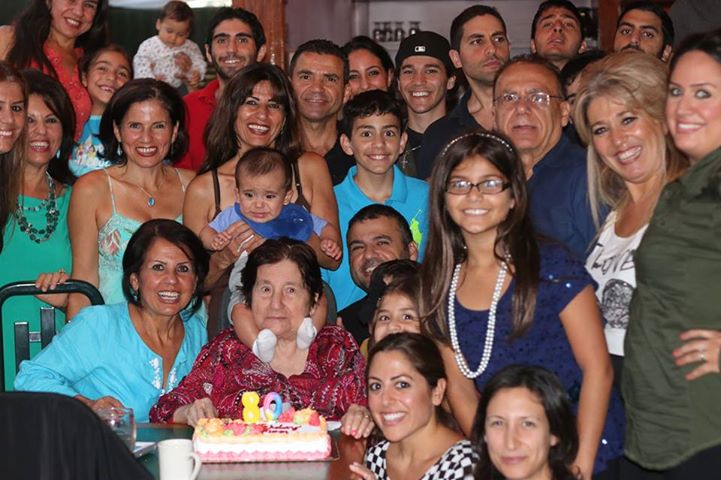
Happy 80th Birthday, Mom!

#5

Millions of Iraqis, including my mother and three of my older siblings, have a July 1st birthday. However, that is not the real month and date of when they were born. Until the First World War, many people, especially in villages and remote mountain areas, never had any identification. They simply belonged to their families and tribes. Their language and culture were their identities. Later, many people did not register their children when they were born.

In 1958, Adul Kareem Kasem was making a census, population count. The government told everyone that they could not leave the house for several days. They went door to door doing a count. Anyone who didn’t have a birthday, they gave him or her a July 1st birthday.
“July 1st was the happy medium, and was an easy way to do everything,” my brother told me. He and my older sisters also received a July 1st birthday.

So, since technically we do not know when my mother’s 80th birthday is, we did not feel too bad that it got postponed from July 1st to September 15.

Interviewing My Mom

Mom 3

The story we leave behind is the best message we give to our children. My mom does not like to tell stories, but she has lived her life in a way that says a lot. Still, for years I’ve been trying to get detailed information from her about her childhood, her early marriage and motherhood. But while I have been successful in doing great interviews with the most prominent members in the Chaldean American community, I have not been too successful with her. She always tries to divert my questions.

Finally, on Wednesday, with the help of my sisters, we poked around until we learned that in the village of Telkaif in northern Iraq, snow did sometimes appear, during which time my mother and other children would slip and slide over it – basically ice skating with shoes.

“What was the biggest lie you ever told?” I asked her.

“I didn’t lie,” my mother said, indignantly.

“Yes, you did,” my older sister responded. “I remember when Babba gave you spending money, you would put it away and when it totaled to two dinars, you gave it to your mother.”

My mother shrugged. “I did do that. They needed it. They didn’t have much.”
“So that was for a good cause,” my sister said.

Even when my mother lied, it was out of the goodness of her heart.

Well, given that my mother is now 80 years old, I have a lot of catching up to do – with regards to jotting down her stories. So I pray that God blesses us with her presence for a long long time.

A Proud Aunt

The Nieces

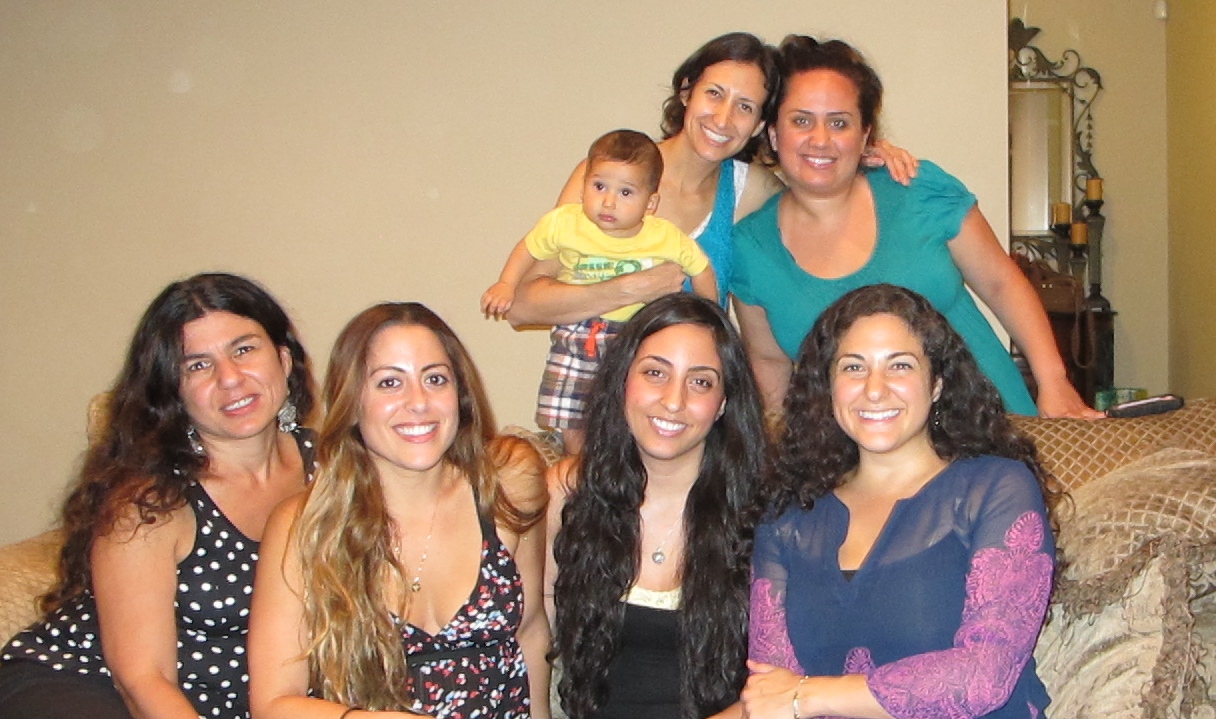
My nieces have grown up to be wonderful women, wives and mothers – most of whom also juggle work. The other day one of them invited us over her house and she proved, once again, to be a great hostess. Watching them do what they do, I am proud to be their aunt, and to have played a role in their lives. I’m a godmother to a few of them, have at one point or another babysat all of them, as well as tutored some, put others to work, gave them quite a bit of advice, and of course, engaged in arguments with them.

Stepping back and observing their lives, I’m once again reminded how sacred family life really is. In the end, the work we put towards our loved ones does pay off.

The Women of Telkaif

IMG_0927

Telkaif like most of the villages in the north is in the city of Mosul, Iraq. Mosul is where Agatha Christie once lived with her husband, an archaeologist who was involved in the excavation in Nimrud in the north of Iraq and he explored the ancient city of Ur in the south.

“I fell in love with Ur,” Agatha Christie wrote in her autobiography.

I fell in love with Telkaif, where my parents and their parents and their grandparents are from.
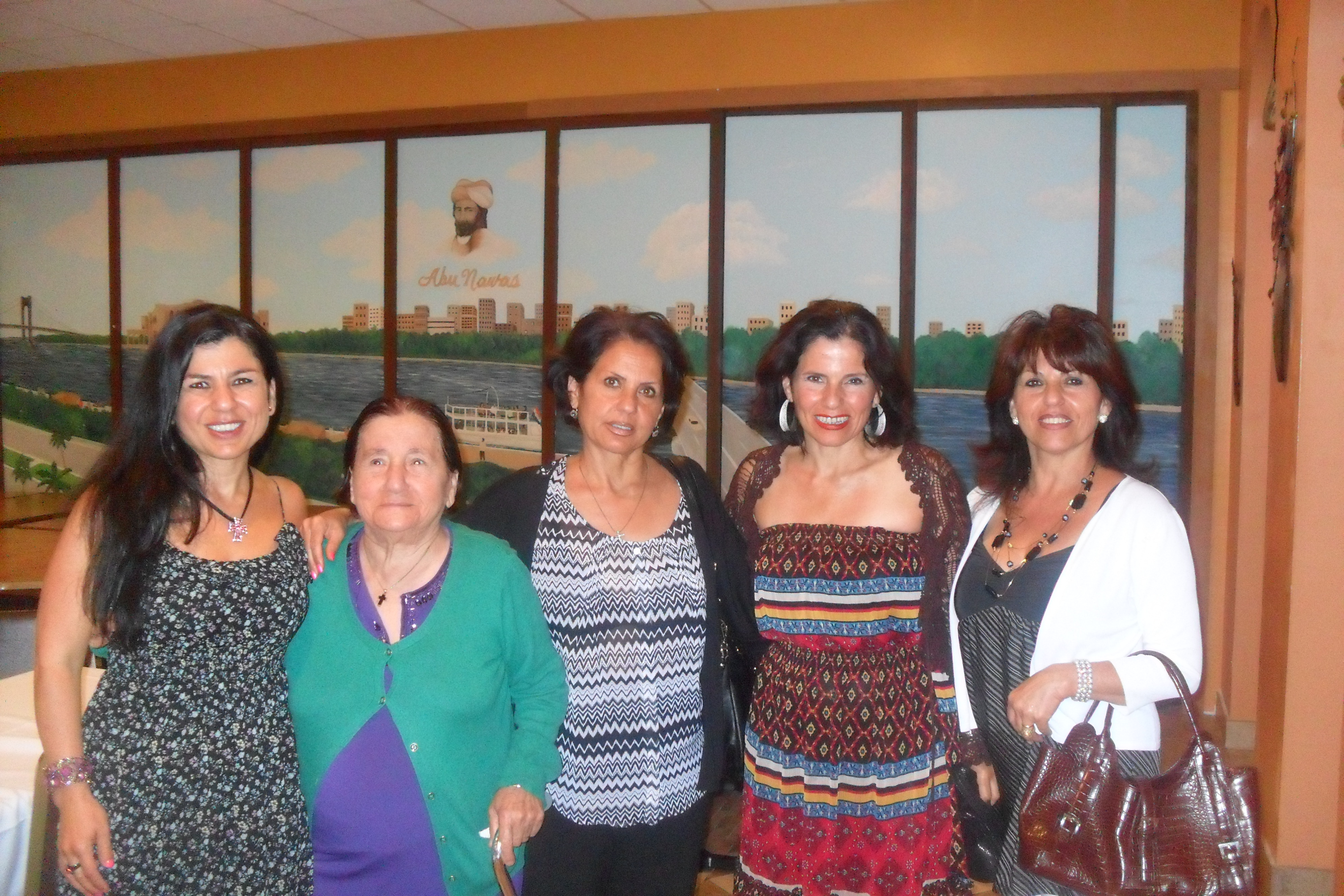
Yesterday I invited over some cousins who I stayed with in Telkaif in 2000. Telkaif is in the province of Mosul, and there, I got to visit the various churches and monasteries that date back to the early Christians in the place, from the 6th Century. I got to sleep on the rooftop and watch the stars shine brightly over the maze of streets and exquisite 19th century houses. I got to observe the fresh meat and dairy market when around six o’clock in the morning, my cousin and I walked to a place where cattle was slaughtered and where countrywomen sat beside a curb, selling homemade dairy products like yogurt and clotted cream. For a dollar, I also bought an abaya, a type of veil, from Mosul’s market.

Things are no longer the same in the northern part of Iraq. According to the Bishop of Mosul, of a 32,000 plus population of Christians, there are now less than 2,500. So I may soon have no relatives left in Iraq to visit.

Flipping a Pot of Stuffed Grape Leaves – The Chaotic Way

My brother-in-law arrived from Jordan a few days ago and we had a gathering for him last night. Although the gathering was nice, it was also quite chaotic. After all, it was an Arab/Middle Eastern family so we’re talking sisters and brothers and nieces and nephews and aunts and uncles and more aunts and uncles.

There were more people than my house can hold and it was too chilly to sit on the patio. My husband was passing out jackets to the men (after checking no money was in any of the pockets) but after staying outside for an hour or so, they walked back in and took up whatever little air was left inside.

The most fun part was when all the women tried to help in the kitchen. I was trying to get to the sink but when I saw the little crowd clustered there, I thought, better get the camera instead.
Turns out the fuss was over the huge and heavy pot of stuffed grape leaves, which my husband’s nephew successfully flipped over. The Iraqi version of stuffed grapes is different than other regions in the Middle East. The dish is called dolma and in it is included stuffed green peppers, cabbage, zucchini, eggplants, onions, or whatever else one’s heart contends. Some even stuff potatoes and carrots, if they’re large enough.

The good part is – at least I did not have a lazy group of people at my house, in which case I would have ended up staying up until 5am cleaning instead of when I actually slept at 1:30am.

IMG_0920

27 Years Ago

Babba

Twenty seven years ago today my father passed away. He was a very pleasant man, full of life and laughter. I didn’t get to know him too well, as I was a young teenager when he died (I knew he loved “Sandford and Son” and “The Jeffersons” and will never forget the way in which he laughed wholeheartedly as he watched each episode). He’d spent the majority of his days in Iraq working hard to support his eleven children. Then we immigrated to the United States, where he fell ill shortly afterwards as our family experienced a big struggle.

But I do know this – I got my love for books from his side. I remember him often walking around with an Arabic/English dictionary in his hand. He was a translator for the train station in Iraq. I also got my passion for education and my independence from him and his sisters, one of whom left the village of Telkaif to go study at the University of Baghdad. This was in the 1950s! Another aunt, who was a single mother because her husband went missing in some war, studied to be a nurse and became the midwife of Fallujah.

Well, I did not get to spend enough time with my father on this earth. But I am often visited by his energy, which especially during adversaries gives me strength to push ahead.