Cultural Glimpse

Enjoying diversity

Category: Spirituality

Writing To Change The World

       IMG_2734Writing Spirit called for me to pick it up like a child off the store’s bookshelves. It was an odd-looking book about writing. On the cover large palms came halfway out of the water, and in the table of contents, the chapter headings had words like power animals, shamanism, alchemy and baptism. None of it made sense to me, and the last thing I wanted was a book on writing. I had been writing for over twenty years, and the journey had proven so futile, I wanted to bury the pits of this desire into someone else’s backyard and start a new garden, one that resembled those in One Thousand and One Nights stories, where the hero ends up with breathtaking trees bearing pears, apples, figs, pomegranates, and apricots made of real gold, diamonds and rubies.

Yet the book stuck to my hands like glue.  I bought it, even though I barely had any time to eat a meal sitting down let alone read a book. I was raising two young children and doing a lot of freelance work, as well as trying to write a book. The moment I read Writing Spirit, however, the fragrance of that Arabian treasure garden raced out of the pages, and I remembered all the reasons I’d become a writer in the first place – the calling, the sacredness of storytelling, the freedom this profession provides, in my case allowing me to raise my children without having to abandon my career. Shortly afterwards, I enrolled in Lynn’s school, The Mystery School.

The Mystery School is a spiritual school that has, for over 25 years, passed down Native American shamanic teachings of 44 women known as the Sisterhood of the Shields. These women are healers from various cultures such as Panama, Guatemala, Australia, Nepal, North American and the Yucatan. Their teachings have been passed from one generation to the next for over 5,000 years. They initiated Lynn as a member of The Sisterhood and appointed her as their public messenger. Lynn’s study began with Agnes Whistling Elk and Ruby Plenty Chiefs, Native American healers in northern Canada. Lynn wrote about her own experience in Medicine Woman, and later, as she met with more of the women of the Sisterhood, wrote over a dozen more books. Her website describes her “as a major link between the ancient world of shamanism and modern societies’ thirst for profound personal healing and a deeper understanding of the pathway to enlightenment.”

I recently met Lynn in person and I discovered that the majority of her apprentices and graduates, who are from all over the world, were first introduced to the Sisterhood teachings by reading one of her books. Something in her books resonates within people the ancient healing and magic of long ago, thus bringing to life, through experiential learning, a connection to spirit and the earth.

  “You write in order to change the world, knowing perfectly well that you probably can’t, but also knowing that literature is indispensable to the world… The world changes according to the way people see it, and if you alter, even by a millimeter, the way people look at reality, then you can change it.”   —  James Baldwin

Unique Relationships Serving Communities

As I watched Laila and Georgia, the 6th episode of the Intersection of Faith and Culture short documentary video series, I thought, “I know these people!” Laila has been quite supportive of my work and Georgia is the wife of Stephen Coats, a filmmaker I met at a journalism conference. We sat on the same panel and since we have followed each other’s work. But, I had no idea Laila and Stephen’s wife are such close friends.

Laila is a Syrian-American journalist who works incredibly hard, acting as an powerful and influential mouthpiece for her Arab Muslim community within the broader American culture. Laila’s friend, Georgia, is Greek-American, and has been a longtime companion of Laila.

“When I came to this country I had no one,” said Laila with teary eyes. “Georgia and her husband Stephen took me in like I was family.”

Over time, the two women have become like sisters to each other.

“I believe that life is deeper and richer and more spiritual when I know and love people who are different than me,” said Georgia, who moved to Dearborn just before the 9/11 attacks. The next day, on September 12th, she was teaching a class, English as a second language, to primarily Arabic-speaking women.

Before moving here, people warned Georgia not to go to Dearborn, which has a large Muslim population, because it’s considered dangerous. But she put her trust in God and figured, she just came from Colorado where in the 1999 the Columbine High School shooting occurred.

“How is this place safe to be, and Dearborn isn’t?” she said. “We don’t know where the dangerous people are.”

When the controversial Pastor Terry Jones wanted to have a protest in front of the Islamic Center of America, the community of Dearborn came together in opposition to his agenda.

“There’s a verse in the Bible that says in the end, there will be people worshiping God from every town, every tribe, every nation and every language,” said Georgia. “That’s what I believe.”

Laila and Georgia are of completely different backgrounds, but they have more similarities than differences – they are both mothers, both spiritual, and they serve their communities in wonderful ways.

Having survived cancer, Georgia shares her journey as a cancer survivor, a wife and mother through her blog http://thecrazyedamommy.wordpress.com/ Laila Al-Husseini is one of the most famous Arab anchors in the United States and is known for her popular show US Arab Radio. The program broadcasts Tuesday mornings, live on WNZK 690 AM to audiences in Michigan, Toledo, Ohio, and Windsor and for audiences in Washington, Virginia, and Maryland, the program broadcasts on WDMV 700 AM.

It makes you wonder why Pastor Terry Jones’ desire to burn Korans and not Laila and Georgia’s example of peaceful relationships get the media’s attention. And what role, do we the audience, play in that?

IMG_1332

The Clearing, a Magical School

Jens Jensen

A week ago I went with my sister to the Henry Ford Estate, to watch the documentary screening of Jens Jensen: The Living Green. We parked our car and to reach the house by foot, walked through a dense woodland area which was created by Jens Jenson, a Danish American landscape architect, known for his “prairie style” design work. He designed the gardens at the Henry Ford Estate and the Edsel and Eleanor Ford House.

I loved the character of this man, who considered himself an artist, not an architect. Jenson saw a connection between the performing arts and nature. He was called a Native Nature Poet. He summed up his philosophy by saying, “Every plant has fitness and must be placed in its proper surroundings so as to bring out tis full beauty. Therein lies the art of landscaping.” He believed that only when we leave the beauty of nature alone, as God created it, would we really have democracy.

At 75 years of age, Jensen, who wanted to create harmony between the hand of man and the hand of nature, established a school in 1935 called The Clearing in Ellison Bay, Wisconsin. It taught environmental citizenship and sought students Jenson thought would “study profoundly… do things worthwhile… not for oneself but for others.”

Jensen died in 1951, at the age of 91. But the school he founded is pretty alive. The Clearing offers year-long educational opportunities in three programs: the Summer program, the Workshop Program and the Winter Program. All programs offer a wide range of classes (which are taught in a relaxed and informal style), including painting, writing, quilting, birding, wood carving, poetry, rustic furniture making, photography, poetry, fine wood-working, music, weaving, philosophy, stained glass, metal work, nature study and paper arts.

Sounds like we have in our country more magical programs than Harry Potter ever did. The only thing is we need to discover them.

The Power of Diversity at Beaumont

I traveled quite a bit before I got married and had children, visiting various countries in North Africa, the Middle East, Europe, and Latin America. I loved what I learned from watching peoples’ different way of life, and I always returned home having borrowed something to incorporate into my daily life.

What I learned after I stopped travelling abroad is that what my Native American teacher often said is true – “If you stand on the corner of New Year long enough, you will see the whole world.”

For years, my community has been fulfilling my desire to see the world by bringing it home. Yesterday morning, for instance, Beaumont Hospital held its 8th year Diversity Conference. The event was amazing!

Through slam poetry and hip-hop performances, Mike Ellison spoke words of love and acceptance that touched our hearts so deeply, we laughed and we cried. Then with DJ Invisible, the rhythm and beat of love got attendees on their feet, in their professional attires, grooving to Mike’s powerful lyrical message at the early hour of 8am. Anyone watching would have thought we had a little more than coffee and bagels for breakfast.

“Hip hop is a culture with roots in Africa,” said Ellison, who was born in Ethiopia, raised in Virginia and who fully realized himself as an actor, recording and performance artist in Detroit. “It’s progressive. It’s about respect and family. It’s not what you see today in commercial rap.”

Mike recently wrote, produced and performed in Broken Mirrors: Bullies & Bystanders. He uses his talents to reach out to students, to get their attention despite the millions of distractions around them. He wants people to see how we mirror each other.

“If we see ourselves in each other, then we are using the universal language of inclusion,” he said.

The next speaker was Chris Bashinelli, and no one imagined that a man who has not yet turned 28 would move us to the extent that he did. Chris was born and raised in Brooklyn, New York. After a decade long acting career including an appearance on the hit HBO TV Show – The Sopranos, he decided to follow his real passion, using media to bridge intercultural gaps worldwide. He now traverses the globe from Tanzania to Abu Dhabi as Host of Bridge the Gap, a new series featured on National PBS Television, where he discovers what it’s like to walk in someone else’s shoes for one day.

Christ talked about what it means to be a global citizen.

“It means being a productive member of our world,” he said. “It’s using our talents to serve others.”

We serve others by three simple steps: listening, being non-judgmental, and being willing to step outside of our comfort zone which is the only way to grow. But why should we bother to become a global citizen?

“Because the lives of people in economically poor countries are 100 percent directly related to our lives in the United States,” said Bashinelli. “Global citizenship does not mean changing geographic location. It means changing your heart. Changing your focus from me, me, me, to look at another person.”

Chris showed us videos of the people he met in other countries, people whose huge, courageous and enduring hearts were a magnificent example for us. One man that particularly inspired me was a man from Tanzania. He wanted to be a filmmaker and show the beautiful side of his country. He had very little resources, in comparison to us at least, but the power within him gave him the strength to work as a filmmaker in his own community because what he kept telling Chris is, “No matter what, I’m going to be a filmmaker. No matter what!”

The next speaker was Steve Luxenberg, a Washington Post associate editor who has worked for more than 35 years as a newspaper reporter and editor. Steve is the reason I went to Beaumont’s Diversity Conference to begin with. I had gone the night before to the Troy Community Center to listen to him talk about his award winning book, Annie’s Ghosts: A Journey into a Family Secret. Impressed by his talk, I visited his website to order his book. This led me to discover an event he was speaking at the next day – the diversity conference.

Steve’s story is part a detective story, part history, and part memoir and it revolves around his mother’s decision to hide the existence of a sister, Annie, who was institutionalized for 31 years in an asylum near Detroit. Through his book, he helps us see the potential damage of secrecy within families and the shame and stigma associated with certain issues that keep , for example, families from obtaining a patients’ medical records long after the patient has died.

He quoted something that Governor Calley, who has a daughter with autism, said recently. “We should stop trying to fix people with a disability. Autism is not a disability issue. It’s a diversity issue.”

“Today in jail, we place people with mental issues in segregated areas,” said Luxenberg. “It was like this in the 1840s. People in the future will wonder why we allowed this today. The way to make progress is to look into the past and learn from it so that we don’t make the same mistake in the future.”

The event had one more speaker, Cheryl Loveday, Executive Director of Angels’ Place, which provides community-based and residential services to nearly 200 individuals with developmental disabilities. I did not have the privilege of listening to her speak as I had to return home. But when I walked out of the event, I was grateful that my family and I and the majority of my relatives belong to Beaumont Hospital’s Healthy System, which has been serving us for decades, and which evidently from the quality of this conference, cares a great deal about having a healthy and conscientious relationship between its employees and its patients.

Beaumont Event Program Booklet

Beaumont Event Program Booklet

In Honor of International Peace Day

International Peace Day

“We invest in chaos because chaos is more profitable than peace,” said Greek composer Vangelis.

Hmmm, everything is making sense now. Luckily, there are many people around the world who opt for peace over profit. Today at church, for instance, the Pastor talked about The Book of Ruth, and how in several chapters of the book, everyone is looking for the best interest of everyone else.

“This is remarkable, and it’s very rare,” said Pastor Aaron. “What would happen if we all lived like Naomi, Ruth, and Boaz? What if as a family we all look for the best interest of each other, beyond the pain? What if as a church we look out for other churches and their pastors and their congregations? When people walk around thinking only of themselves, it becomes a toxic environment for other people.”

He added, “When I go into a season of discouragement, I get out and start thinking of someone outside of me. This is when I begin to get healthier.”

Are you up for a healthier spirit?

The Shroud of Turin Exhibition

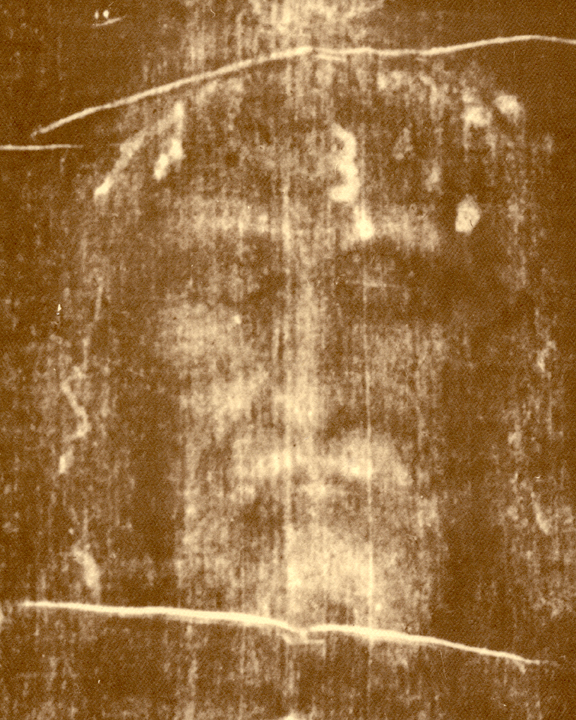
shroud-of-turin-face

As a journalist who has over the years researched many subjects and covered many stories, I was not expecting to be so awe-stricken by the Shroud of Turin Exhibition in Royal Oak. I entered the audio-guided chambers imagining that I would walk out with a load of information. Instead I came out in a trance.

The Shroud of Turin is a length of linen cloth bearing the image of a man who appears to have suffered physical trauma in a manner consistent with crucifixion. There is no consensus yet on exactly how the image was created, and it is believed by millions to be the burial shroud of Jesus of Nazareth.

The exhibit originated in Spain in 2011. When Spanish native Jose Juan Garrigo visited the exhibit, he felt that this had to reach as many people as possible. He brought it to Metro Detroit, where he has lived since 1988, and expects to tour about 70 other U.S. cities in the next 20 years.

“There’s a lot of controversy around this, whether it’s real or not,” said Ermal Caushaj, Theatrical Productions Manager of Immersive Planet, a company that designs international venues and brought the exhibit to the U.S. “We’re neutral. We’re just presenting the scientific facts and telling people to come see for themselves.”

“This is something for everybody,” said Garrigo, CEO of Immersive Planet. “Whether you’re Catholic, Protestant or an atheist, if you have an intellectual curiosity, this is the place to be.”

This is the key question – do we as a society care enough about our intellect to invest in it? Or will we continue to cast our pearls before swine, to participate mostly in the sort of entertainment that hinders our senses rather than feed our mind, heart and soul?

For me, the answer to that question is more of a mystery than whether or not the Shroud of Turin is real or fake.

For more information about the exhibit which ends August 17, visit shroudexpo.com

Maleficent is Magnificent

Maleficent_poster

When we decided to go to the movies, we split up. The men and boys went to watch How to Train Your Dragon 2, and my daughter and I went to see Maleficent which stars Angelina Jolie. It was her pick, and it was wonderful because aside from taking us into the enchanted world of faeries, it was not your typical prince saves the princess story. True love can and does save lives, and sometimes it comes from people you least expect.

In Maleficent, the moral of the story is that society’s greed – particularly that of patriarchy – is the villain that generates more villains. The pure of heart could either fall into the trap of having a bitter and vengeful attitude, or they could rise above it, and have victory over themselves!

That is the choice we make everyday.

What “If Only” Moments Are in Your Life Right Now?

If Only

“Our Creator wants our ‘If only’ moments to become teaching moments,” said Pastor Marcus during today’s sermon at Freedom Christian.

The pastor shared how over a bad break-up, he had become sad, depressed, angry and bitter because he held on to one ‘if only’ moment rather than learn from it and move on.
“We use our ‘if only’ moments as an excuse not to take responsibility for our lives,” he said. “We say, ‘If only I had a different upbringing, a different past, or if I could clear up some things in my life, then I could have this or that, or have a relationship with my Creator.”

He told us the story of King David, who said to God, “If only you, God, would slay the wicked!” because King David felt that if God could do this one thing for him, he in return could do so much for God.

“When you identify what your ‘if only’ moments are and hang onto it, you get stuck in your struggles and pain because you blame someone else for your life,” said Pastor Marcus. “You do not take responsibility for your actions. You lose your dreams and hopes because it’s hard to look towards your future. You never progress emotionally and get stuck in immature ways of thinking.”

While Pastor Marcus would not trade his ‘if only’ moments, as they helped him be the man he is today, he also encourages us to have God help us turn our ‘if only’ moments into a teaching moment.

If only people would take this message seriously…

Lisa Nichols – I know, like I know, like I know, like I know

lisanichols

A few months ago I received an email invitation from Mindvalley Academy for a live creative visualization session with Lisa Nichols. Lisa was described as “The Secret’s” amazing star. I signed up for the session, not expecting to get what I got.

For many years, I have read books on the power of the subconscious mind, creative visualizations, looking within and manifesting your dreams. As a result, I have been able to live the life that I want. But of course, no matter where one is, there’s always that passion and desire for growth and mystery. The day of the live session, Lisa took me deeper than I had gone in a long time. Her voice pierced through my heart like sunshine and lightening, making my vision resonate the words that she’s famous for saying – “I know like I know like I know like I know.”

Then in April, she offered a “Power Week” free teleseminar where every morning, she set a powerful intention for the day, did an inspirational interview with one of her friends, wrapped up with a power action for people to do that day, and sometimes she sent out a homework assignment.

What I liked most about Lisa is that she’s not all about the money. She talks about her son quite a bit, about the value of healthy relationships, and during part of the “Power Week” she was talking to us from the hospital where her father was going to have surgery. She said she’d turned her car and the hospital waiting room into her office. I loved that! It reminded me how for a month now, I’ve been going back and forth to the hospital where my mom is, lugging around a computer and a heavy bag of notebooks.

“How many of you have an amazing life but you get distracted by the BUT?” she once asked.

Lisa is about motivating the masses (www.visitingthemasses.com), and she’s worth listening to, or at least reading her books, like “No Matter What!”

Starting Point: Find Your Place in the Story

Jesus2

When I signed up for “Starting Point”, a ten week bible study class, I was not sure why I signed up. All I knew was that the past sixteen months of going to Freedom Christian had taught me quite a bit about the religion I was born into, the religion of my ancestors, and I wanted to honor this religion by learning more.

Each week, people in the group talked about their story of faith, and then through a book, CD, and conversations with the pastor and his wife we explored many subject matters, particularly the role God has played in our story up until now. Thought-provoking questions were raised and ways of becoming more intimate with God were discussed. Everyone’s courage in sharing their stories, in proclaiming how their faith changed their lives, touched and inspired me.

Through the process, I began to see my place in the story, remembering my grandparents who lived in the then Christian village of Telkaif in northern Iraq. My maternal grandfather Tobia went to church every morning at 5:30am, before he had breakfast and began working on his farm. He went to church a second time in the evening, before dinner. I remembered my people, the Chaldeans, who were one of the first in the Middle East to embrace Christianity and I reflected on the persecution they have had to endure for hundreds of years, especially in the last ten years. I looked at my relationship with Jesus, and saw how his energy lived on from one generation to the next – in our case, for two thousand years. He was in our blood.

“I know the story Jesus has had in my life throughout the years,” I said when I shared my story with the class. “Now, through the Bible, I want to read about his story.”

So while the class ended today, my story in this journey is just beginning.