Cultural Glimpse

Enjoying diversity

Category: Political

Trumbo’s Communism was the Islamism of the Time

My father, a lover of words and numbers, was the head of the accounting department for Baghdad Railway Station. On the side, he did translation, from Arabic to English and vice versa. His free services included being a bonesetter and representing people who could not afford an attorney in court. People trusted him because he was a just man and he knew how to play with words as if they were marbles.

Words can be used with good or bad intentions. My father used words to help heal and free people. Some people, like government officials and media personalities, play with words to instill fear and oppress people. They will take a word like communism and flavor it with all the necessary negativity to cause an unwarranted fear and create an Us vs. Them attitude.  Anyone slightly associated with that word is the “Bad Guy” and anyone against that word is the “Good Guy.”

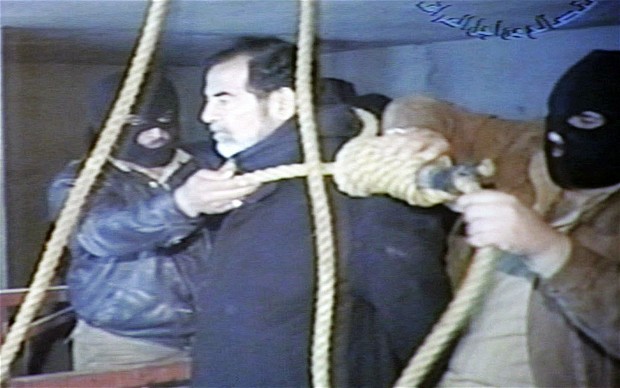
Let me demonstrate a specific way the government played with words to help its war campaign against Iraq. The communists of Iraq are rarely mentioned because, for the sake of showing what a brutal man Saddam was, these communists were renamed anti-Saddamists. Look at the infamous black and white televised image of Saddam at the podium. He announces that “There are traitors among us (i.e. communists).” Then he calls off a list of names (given to him by US gov.). He wipes tears from his eyes because some of these men, although communists, were his friends. But he was willing to do anything to align with his western allies and gain power.

The US helped the rise of the Baathist Party because they did not want another communist country. From the beginning, they offered a list of 800 Iraqi communists to the Baathist insurgents, and all were killed. Many communists fled Saddam’s regime. The televised image of Saddam calling out the names of these communists (later called anti-Saddamists) was circulated to convince people that the world would be safer and more peaceful without Saddam.

Ironically, removing these 800 communists, then removing Saddam, has not made the world safer or more peaceful. We’ve actually achieved the opposite effect. Yet, when I watched Trumbo the other day, I realized that we’ll be doing more of the same thing and expecting a different result (the definition of insanity). We’ll continue to be tricked into a fear-based atmosphere which will distract us from what’s really going on and rob us of our true freedom.

I write not to point fingers. I write from experience. Having grown up in a totalitarian regime, I can smell oppression thousands of miles away.  For that reason, I strongly encourage people to not only watch Trumbo, but to learn from it.

Counterpoint: Religious Intolerance Serves No One

Religious Tolerance

This opinion piece was originally published by The Chaldean News a few days ago http://www.chaldeannews.com/counterpoint-religious-intolerance-serves-no-one/

Many of our people, like Californian artist Paul Batou and Chicago attorney Wisam Naoum, have compared the genocide of the Christian Iraqis to that of the Native Americans, who recount how an estimated 80-100 million of their people were wiped out by disease, famine or warfare imported by white men carrying crosses who came here to find gold and to own new land. Those who survived were forced to convert to Christianity and to abandon their traditions and their native language.

Yet, we don’t see Native Americans protesting against our churches in the prejudiced manner we’ve protested against mosques. They keep their ancestral memory and lessons alive through storytelling and ceremonies, not hate speech.

Native Americans mainly blame politics and greed, not religion, for what happened to them. They’re not the only ones with this viewpoint. Ariel Sabar is a Kurdish Jewish author whose father was from Zakho. Currently a professor of Hebrew at UCLA, Sabar is a native speaker of Aramaic and has published more than 90 research articles about Jewish Neo-Aramaic and the folklore of the Kurdish Jews. In his book, My Father’s Paradise, he describes the old community in Zakho:

“Muslims, Jews, and Christians, Judaism, Sufi mysticism, Bahaism, and Yezidism flourished alongside one another and extremism was rare…. Muslim, Jew, and Christian suffered alike through the region’s cruel cycles of flood, famine, and Kurdish tribal bloodshed. They prospered alike when the soil yielded bumper crops of wheat, gall nuts, and fragrant tobacco. In important ways, they were Kurds first and Muslims, Christians, or Jews second.”

Sabar also blames politics and greed, not religion, on the mass exodus of 120,000 Jews from Iraq in the 1950s. Some of Sabar’s accounts are similar to what occurred last year with ISIS’ Christian genocide. If we were to research history, we would see that political greed is at the root of most invasions, massacres and occupations.

If we choose to have a one-sided memory, we will never be able to have a dialogue with other cultures, ethnicities and religions, and yet that’s what democracy is about. It’s the reason this country has such great potential and why people risk their lives to come here.

We remember the 1933 Simele Massacre but we forget the 1991 Gulf War, the unjust UN-imposed sanctions that were enforced on Iraq for more than 12 years, and the 2003 U.S.-led invasion, all which caused the deaths of millions of innocent Iraqi civilians and a refugee crisis for which the world is today paying the price. The Arab world looked upon these wars and sanctions as Christians’ war against Muslims. During that time, many in Iraq began labeling Christians “Bush’s people” and terrorists were easily able to recruit extremists.

Despite all this, Saddam did not permit Muslims to use hate speech against Christians. Batras Mansour, a refugee I once interviewed, said, “I haven’t seen a day of peace since the war. During Saddam’s regime in Iraq, we experienced much better days. Back then, no one could say a wrong word to us Christians.”

Mansour told the story of how an imam spoke against the Christians over the microphone. After he was reported to authorities, the mosque was circled by four cars. The imam was taken away and no one saw him since.

So was Saddam more intolerant of religious hate speech than we are?

Over the years, I have interviewed dozens of people from the Catholic religious order. They never blamed Islam for Iraq’s current situation. In my recent book about the lives of Iraqi American artists, most of the artists expressed nostalgia for the Iraq that was once unified.

Randa Razoky said, “I once painted a painting of mosque, churches, and Mandaean men baptizing women by the river, where the Tigris and Euphrates Rivers flow. This painting represents an Iraq of diverse religions which no longer exists. We lost that Iraq.”

Maybe We can get that Iraq back if we open our hearts and re-learn to co-exist. Otherwise, true peace will never find a home within us.

My Kurdish Shia Friend

Artwork by:  Luis Rosenfeld

Artwork by: Luis Rosenfeld

Yesterday, two of my poems were published by Section8Magazine http://www.section8magazine.com/my-kurdish-shia-friend/

  1. My Kurdish Shia Friend
  2. Redder and Redder

My Kurdish Shia Friend

I had no inkling that she was Muslim,
that she was not Christian like me.
I had no knowledge of her Kurdish heritage,
and that Kurds were a branch of the Iranian tree.
I knew not that she was a Shiite,
nor did I understand what that word meant.
What I did perceive, and still do,
was that her name, Niran, meant fire.
In Baghdad, she lived across from me
in a house with a blue door.
Her mother was a beautiful woman
who treated me like a daughter.
We both wore our hairs in ribbons and braids
and were the best of friends
until our lives dramatically altered
because we had to abandon our homes
due to other peoples’ addictive interpretations
of politics, ideals and religions.

Redder and Redder 
I turn redder and redder
each time they slaughter a human being
in a manner that resembles the slaughter
of a sheep for a fancy feast honoring a big celebration.

I turn redder and redder
each time they command a woman to remain a prisoner
in her body and home, giving her a punishment and a sentencing order merely because God chose her to be a certain gender.

I turn redder and redder
each time they train impressionable children how to execute acts in the name of Allah, acts that are insane with void and aggression, acts that are frowned upon even by the animal kingdom.

I turn redder and reader
each time they spread their wings, possess more land,
swim into the hearts of the innocent and conquer peace
rather than overcome their own terrifying addictions.

Creating Alternative Ways to Serve Our Country

Army

This afternoon, I actually had free time on my hands, alone. Wanting to take full advantage of this rarity, especially now that it is summer and my children are home from school, I drove to the bookstore. I treated myself to a white chocolate mocha and browsed through the book shelves. I picked up a small book that called out to me, titled The Thing You Think You Cannot Do. I opened to a page that talked about the author’s experience in Iraq.

I walked with the book to the café and sat at a table next to the window. I returned to that page, and read something that I thought was quite appropriate to share for the Fourth of July Holiday. Here are excerpts of what the author, Gordon Livingston, M.D., wrote in Chapter 10, Beware of ideas on which we all agree:

“No shared feelings are more firmly embedded in the American culture than the admiration and gratitude that we have toward the young men and women who have served in our most recent wars. Their sacrifices are celebrated at every opportunity, and stories about our “wounded warriors” and their families are a stable of the nightly news. Our great national spectacles – sporting events, holidays – become occasions for patriotic celebration and remembrance, rife with clichés (such as “Freedom isn’t Free”) designed to reassure us that, while we personally have not chosen to sacrifice anything during wartime, we at least appreciate those who have made the choice to do so. They stand in their camouflage uniforms often looking a little mystified at the applause.

The reflexive impulse to treat our troops as heroes serves an important part aside from relieving our guilt at having done nothing ourselves. The war in Iraq, no less than other wars, involved the morally ambiguous process of killing large numbers of people who posed no threat to us. Because the instruments of destruction were our sons and daughters, we find it hard to take responsibility for asking this of them without regret and self-examination. Ignoring our misjudgments and redoubling our admiration for the young people who risked everything on our behalf are far easier….

The “Support our troops” bumper magnets that blossomed as the invasion of Iraq commenced could have just as well read “My country, right or wrong!”

And so we venerate those who put themselves in fear-inducing situations on our behalf and did whatever they could to survive. Most of them are neither heroes nor killers, just patriotic people volunteering to hazard themselves for reasons that to them seemed good at the time. Can we deal with our fears in some way that does not involve the use of bullets or high explosives? Can we celebrate those willing to take risks while creating alternative ways for young people to serve their country that are less costly to them and to others in distant places who love their children in the same way that we love ours?” 

I hope that we value our troops enough to listen and reflect upon the questions Mr. Livingston posed before us, and invest the time, wisdom and love necessary to find answers for these powerful questions.

Never Forget Those Who Spent Their Lives Protecting, Empowering and Informing Us

IMG_3793

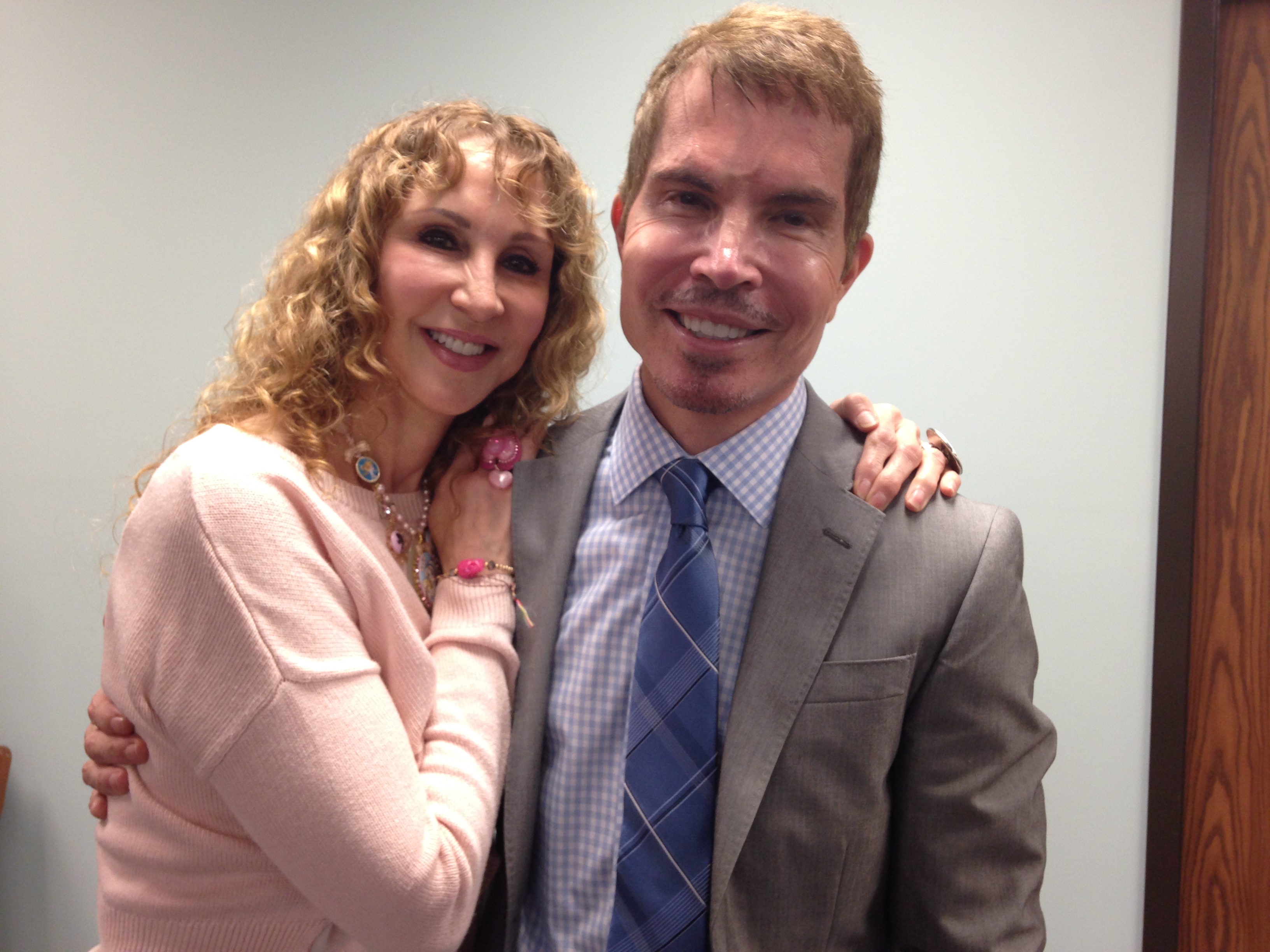
Last week investigative journalist and author of twelve books Gerald Posner visited the Troy Public Library. I arrived early to the event and sat in the front row. A beautiful woman with exquisite jewelry sat nearby. The man behind me was asking her questions and I soon discovered her name is Trisha, and she was the author’s wife.

With a British accent, she talked about how she and her husband met thirty five years ago. She’s from England, he’s from San Francisco, and they met on a blind date in New York. He started out as an attorney, she was in fashion, he’s Catholic, she’s Jewish, but they work as a team. She helps do research for her husband’s books.

Posner’s work has received much controversy, and at one point, even death threats.

“Once someone sent us a dead fish and another time, a rat’s tail in the mail,” said Trisha. “I was very surprised. I never realized that at this day and age, this type of mentality exists.”

She adds that this has never, and never will, stop them from writing what intrigues them.

Posner’s first book, co-written with British journalist John Ware and published in 1986, was the biography of Mengele: The Complete Story. Mengele was a German Schutzstaffel (SS) officer and physician in Auschwitz concentration camp during World War II. From May 1943 through January 1945, Mengele selected who would be gassed immediately, who would be worked to death, and who would serve as involuntary guinea pigs for his spurious and ghastly human experiments (twins were Mengele’s particular obsession). After the war, he fled to South America, where he evaded capture for the rest of his life. Posner and Ware obtained exclusive access to 5,000 pages of Joseph Mengele’s diaries and personal papers for their book.

Another one of Posner’s books is Hitler’s Children: Sons and Daughters of Leaders of the Third Reich Talk about Themselves and Their Fathers, which includes in-depth interviews with a dozen children of top Nazi officials.

Why America Slept exposes the frequent mistakes made by law enforcement and government agencies, and demonstrates how the failures to prevent 9/11 were tragically not an exception but typical.

In Secrets of the Kingdom: The Inside Story of the Secret Saudi-U.S. Connection, Posner provides an account of the “close” business and personal relationship between the House of Saud and the U.S. government, including discussions of “dirty bomb” technology and the financial and political maneuvering surrounding 9/11. Posner also asserts that the Saudis have built an elaborate doomsday scenario around their oil fields. The Saudis have denied this, and according to Posner, he and his wife, Trisha, have been banned from entering Saudi Arabia as a result of this book.

Posner’s most recent book is God’s Bankers: A History of Money and Power at the Vatican is a 200 year history of Vatican finances and the Vatican Bank.

“For 1800 years, these were Pope Kings who had their own empire and lived a lavish lifestyle,” said Posner. “They lost it in the late 1800s and they got it back by Mussolini, the fascist dictator of Italy, who gave them sovereignty in 1929. This changed everything.”

By World War II, the church created the Vatican Bank that operated “in the dark, in total secrecy.”

Posner explained how during this time, the Nazis collected a tax for the Vatican that amounted to 100 million dollars a year.

“Part of the silence from the Pope in World War II was financial,” he said.

In a review written in the Washington Post by Beth Kingsley, she states:

“Church leaders’ priorities were often questionable. Reluctant to publicly address the Holocaust, they did not hesitate to protest reports of nudism being practiced by the Germans. Prostitution worried them more than did death camps.”

This reminded me of the same-sex marriage laws that the world is focusing and refocusing on right now as hundreds of thousands of peoples are destroyed by the war in the Middle East that we have the power to put an end to.

Some people have called God’s Bankers anti-Catholic, but Posner says, “Now wait a minute, I’m Catholic. If you’re a devout Catholic it should not mean you cannot look at all sides of that topic. You can’t leave out the bad news with the good news. I can’t write about Germany and leave the Holocaust out. I can’t write about Henry VIII without writing about him having chopped his wife’s head off.”

It seems that anyone who is smart enough to want to question and research a topic, which we’re all encouraged to do since a very young age, is automatically called “anti this” and “anti that”.

“This book is not about God and it’s not about religion,” he said. “You can learn from it so it can be avoided in the future.”

That’s exactly what truth is all about, and why men and women risk their lives to defend the United States or immigrate to this country. The practice of free speech is a gift from God, and in realizing its importance, this country made it a First Amendment. Incredible amount of information is easily and readily available to us, yet most people will not bother investing their time in such matters, even though that’s one of the greatest ways to pay tribute to our veterans.

ISIS Continues Targeting Christians

Assyrians

My friend Nahren sent me the following report:

It is being reported by my journalist friends in Khabour that ISIS has started using the Assyrian Christian hostages as human shields including the children against the Syrian Military. It is confirmed that the amount of hostages right now are 217 and the difference from the original amount were hiding in red zone areas until they made their way back to their families and were identified. However, ISIS is requesting a ransom of $100,000 per Assyrian Christian hostage. The Sheikhs are trying to demand for their release through consistent communication and the sheiks claim that the 217 are still alive. Many Americans and non-Assyrians have attempted to drive into the Northern Part of Khabour which is under the Kurdish occupation. They were turned away even with permits from the KRG.

It is also reported by numerous sources that as some of the civilians made their ways back to their homes, they found that the Kurds completely have taken over their homes and properties. They were told that their homes did not belong to them anymore. Journalists and media are not permitted in the area anymore and witnesses have confirmed that they were allowing only Kurdish civilians to enter through the border. Furthermore, it is reported that the Kurds are already attempting to convert the Assyrian Christian village names into Kurdish names (it’s confirmed that 2 to 3 villages have already been changed).

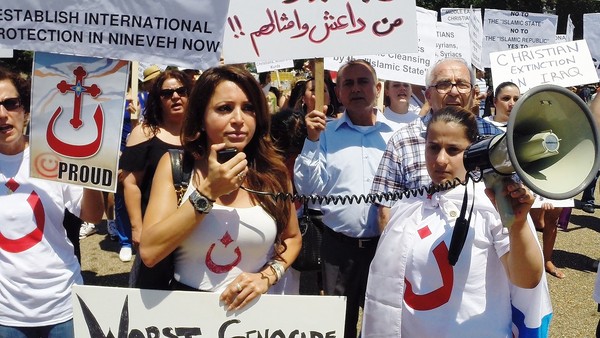
I asked Nahren, who with other activists demands international protection, why the Iraqi minorities have not yet been helped. She explained part of the problem.

“Our own people are so divided in organizations, political parties, churches and so forth,” she said. “The day our people (Assyrians, Chaldeans and Syriacs) will unite like we used to be, I promise that Nineveh will rise with an amazing power that will be distinguishable in the world.”

Which reminded me of the famous Pogo quote, “We have met the enemy and it is us.”

Conversation Between Saddam and Glaspie about US Media

Media

APRIL GLASPIE: I have a direct instruction from the President to seek better relations with Iraq.

HUSSEIN: But how? We too have this desire. But matters are running contrary to this desire.

GLASPIE: This is less likely to happen the more we talk. For example, you mentioned the issue of the article published by the American Information Agency and that was sad. And a formal apology was presented.

HUSSEIN: Your stance is generous. We are Arabs. It is enough for us that someone says, “I am sorry. I made a mistake.” Then we carry on. But the media campaign continued. And it is full of stories. If the stories were true, no one would get upset. But we understand from its continuation that there is a determination.

GLASPIE: I saw the Diane Sawyer program on ABC. And what happened in that program was cheap and unjust. And this is a real picture of what happens in the American media — even to American politicians themselves. These are the methods the Western media employs. I am pleased that you add your voice to the diplomats who stand up to the media. Because your appearance in the media, even for five minutes, would help us to make the American people understand Iraq. This would increase mutual understanding. If the American President had control of the media, his job would be much easier.

How to Advertise War

How to Advertise War

From The Magic of Believing by Claude Bristol (published 1948), pages 51-52

For forty-four years, ever since the Russ-Japanese war, the Japs immortalized Naval Warrant Officer Magoschichi Sugino, fabled as one of Japan’s early suicide fighters and greatest heroes. Thousands of statues were erected to his memory and in repeated song and story young Nipponese were taught to believe that by following his example, they could die in no more heroic manner than as a suicide fighter. Millions of them believed it and during the war thousands of them did die as suicide fighters… This terrible and persistent deeply founded belief, though based entirely on a fable, caused thousands of Japanese to throw away their lives during the war.

We, too, as Americans, were subjected to the power of suggestion long before and during World War I; we got it again in a big way under the direction of General Hugh Johnson with his N.R.A. plan, and in World War II it inspired us to increase our effort, to buy bonds, and so forth. We were constantly told that Germany and Japan had to be defeated unconditionally. Under the constant repetition of the same thought all individual thinking was paralyzed and the mass mind became grooved to a certain pattern – win the war unconditionally. As one writer said: “In war the voice of dissension becomes the voice of treason.” So again we see the terrific force of thought repetition – it is our master and we do as we are told.

This subtle force of the repeated suggestion overcomes our reason, acting directly on our emotions and our feelings, and finally penetrating to the very depths of our subconscious minds. It is the basic principle of all successful advertising – the continued and repeated suggestion that first makes you believe after which you are eager to buy.

How Saddam, the So-Called Butcher, Dealt With Prisoners

Who's the Real Butchers in this Picture?

Who are the Real Butchers in this Picture?

Iraq was bombed for 43 consecutive days during the 1991 Gulf War.  The coalition flew over 100,000 sorties, dropping 88,500 tons of bombs, and widely destroying military and civilian infrastructure. So when Iraq captured Americans and journalists a few months later, what did they do to them? They released them.

Missing American, French Journalists Released by Iraq

April 16, 1991 | From Reuters

An American and a French journalist, missing and feared dead in Iraq for almost three weeks, are alive and on their way to Amman, Jordan, from Baghdad, CBS News reported Monday. CBS News broadcast a brief interview with Frank Smyth, 29, and Alain Buu, 30, who were released from an Iraqi prison. Both men said they were fine, but they did not give full details of what happened to them after their capture by Iraqi troops while covering the Kurdish uprising in northern Iraq.

Ex-POWs Return to Hero’s Welcome at Camp Pendleton

March 19, 1991 | JOHN M. GLIONNA, TIMES STAFF WRITER

Two Marine Corps fliers who spent 48 days as Iraqi prisoners of war, most of the time handcuffed and blindfolded in prisons in and around Baghdad, returned to their home base to a hero’s welcome Monday. Shortly before dusk, the Air Force Lear jet that had carried Lt. Col. Clifford Acree and Chief Warrant Officer Guy L. Hunter Jr. from Washington touched down on a wind-swept Pendleton runway as hundreds of family members, friends, well-wishers and fellow Marines shouted their names and waved American flags and yellow balloons.

The two men were forced to eject from their damaged OV-10 Bronco reconnaissance plane on Jan. 18 and parachuted to the Kuwaiti desert, where they were seized by patrolling Iraqi soldiers.

In Honor of the Jordanian Pilot Killed by ISIS

Cradle of Humankind

Cradle of Humankind

Lynn Andrew’s Walk in Balance has daily readings filled with ancient wisdom. For February 3, the following is the teaching:

Respect the Unknown

Great evil has been done on earth by people who think they have all the answers. They have no respect for the unknown. If you do not see all sides of truth and you think that only what you understand is valid, then you dishonor power. You ignore much of the body of the Great Spirit. The body of the Great Spirit is all creation.

We are limited as human beings. Most humans live in a tiny little world where only their own perceptions are accepted as real. They will kill for those perceptions. I am asking you to respect what you don’t see. Give humble respect to what is unknown and unknowable in the universe.

Ruby Plenty Chiefs

Crystal Woman

*   *   *   *  *  

Given the cruel manner in which the Jordanian pilot was burned to death by ISIS today, the February 3rd teaching is most appropriate to describe what is happening in our world.