Cultural Glimpse

Enjoying diversity

Category: Culture

Great Belly Dancing Man

Many feel that dancing is a healthy form of getting rid of stress.  Today, belly dancing has been adopted by nations all over the world, and is seen as more of an art form than as entertainment. According to an article written by Farhad Peikar, in China belly dancing has become a favorite among the youth, and not just for girls. Boys are equally receptive of the new dance and have joined studios in major cities.

I think the guy in this video would be a great candidate for teaching belly dancing.

Legendary Iraqi Singer

Sadoon Jabir is a legendary Iraqi singer who back in the olden days, brought my mom to tears as she listened to him on the radio and remembered her son who’d left Iraq for America when he was 21 years old. Yesterday at Farmington Manor, he brought many tears, as he is known to do wherever he goes, as he sang his famous heart-felt songs about love and Iraq.

In honor of its first year anniversary, the Mesopotamian Forum for Art and Culture brought Sadoon Jabir and the great Iraqi composer, Nadhem Naeem. I was to cover the story, and I tried to – when I wasn’t swept away by the wonderful songs, the tears, the laughter, the joy and the excitement. Because of all the excitement, Mr. Jabir said it would be best that I interviewed him one-on-one on a different day.

After watching him perform, I wonder if when I do get that chance to sit with him if I’ll be more apt to beg that he sings some or whether to ask him questions.

IMG_0360

Leave a comment
February 18, 2013

Partying Arab Style


Dancing the Depka

In celebration of finishing the first-draft of my book and as a belated Valentine’s Day outing, I wanted to go to Lazeez, a Middle Eastern nightclub. My sister’s husband operates Lazeez, which is in Livonia. It’s a chic table-seating nightclub with a live band, great food and the wonderful smell of nerguila (water pipes).

We were a large group of siblings and their spouses, but no one knew about me finishing the first draft of my book. I didn’t want to talk or think about books last night. I just wanted to have fun. And it was fun. We enjoyed heart-felt music, we laughed, we danced, and we got home later than we’re accustomed to.

Middle Eastern music influenced (and has been influenced by) the music of Greece and India, as well as Central Asia, Spain, Southern Italy, the Caucasus and the Balkans, as in Byzantine music and Chalga. As for dancing, there’s a growing body of evidence that the thousands year old belly dance moves date back to Neolithic times and the Goddess-based cultures that existed then.

There’s also the depka, a line dance that forms from right to left. The leader of the dabke heads the line, alternating between facing the audience and the other dancers.

Yes, it was a very fun Saturday night, except the party when on the way home someone vomited in the car, my car.

January 26, 2013

Greektown and the Auto Show

IMG_0175

Over twenty years ago, when I was a student at Wayne State University, my friends and I frequented Pegasus in Greektown. We loved their traditional Greek cuisine and music, the staff who mostly had a Greek or Arab accent, the open kitchen and cozy atmosphere and the periodic shouts of “Opa!” and the flame that we worried would catch our long Mediterranean hair.

But Greektown was not always Greek. In the 1830s, German immigrants settled in that area. Little by little they began moving out and in the 1880s Greek immigrants began taking their place. By the 1920s, the area was becoming primarily commercial rather than residential, and the Greek residents began moving out. Yet their restaurants, stores, and coffeehouses stayed put. In 1960 the Greektown neighborhood was reduced to one block, beside it the big Greek Orthodox Church that was founded in 1910.

After I had kids, I just couldn’t get to Pegasus as easily as when I was single. I think I might have gone without a genuine Greek dinner for a period of two years. Luckily, that hasn’t been the case for over a year now. Yesterday was one of those special nights where not only did I enjoy a dinner at Pegasus but I also got to go to the Detroit Auto Show for the first time in my 32 years living in Michigan.

The first auto show was held in Detroit in 1907 at Beller’s Beer Garden at Riverside Park and since then annually except 1943-1952. It was renamed the North American International Auto Show in 1989. Since 1965, it has been held at Cobo Center where it occupies nearly 1 million square feet of floor space.

We took the People Mover, an automated system that encircles downtown Detroit, to Cobo Center. It was packed with people trying to get to the Auto Show. Last time we rode it on a Sunday afternoon it was empty. The Mover costs $12 million annually in city and state subsidies to run. In fiscal year 1999-2000 the city was spending $3 for every $0.50 rider fare, according to The Detroit News. The system was designed to move up to 15 million riders a year. In 2008 it served approximately 2 million riders. I wish it was always as busy as it was yesterday – like the transportation systems in cities like New York.

The car show was a wonderful new experience for me, despite not having a big interest in cars. My brother said that the show has come a long ways since he last attended over ten years ago. Who knows – maybe one day all the corrupt people will be gone and Detroit will be at its peak once again!

January 13, 2013

Multigenerational Homes

My mother with my daughter

My mother with my daughter

On Wednesday night, I went to visit my brother who had just been released from the hospital for a minor health issue. He lives less than a mile away with his wife and their three children and with my mother. Before I got married eight years ago, I lived with them as well. That’s the eastern tradition. Whether you’re a man or a woman, you live under your parents’ roof until you get married.

Shortly after I arrived to their home, I took off my shoes and curled on the couch as my children went to play with their cousins. I was exhausted and needed some rest and this was the one place where I can feel free enough to sleep well and be attended to. When I returned home, I tried to do research on when it became a norm in America and other western countries for children to start leaving their parents’ homes at age eighteen – a custom that easterners cannot fathom.

I couldn’t find the answer to that, but a report published in London, co-written by associate professor Enrico Moretti of the University of California-Berkeley, found that eight in 10 Italian men ages 18 to 30 live with their parents, compared with one in five in Great Britain and one in four in the USA. There were a lot of articles discussing the fact that these days a lot of adult children (14 million) are still living at home for economic reasons. Dr. Phil has an article out called “Steps to Independence: How to Get your Adult Child Living on their Own” where he talks about the simple steps both parents and their kids need to take to make their lives more productive, fulfilling and healthy.

But what better way is there to have a more productive, fulfilling and healthy lifestyle than when you grow up amongst children and elders, amongst birth and death? This type of lifestyle can teach a person the type of independence, responsibility, love, cooperation, maturity, and respect that no book, class, school or doctor can teach.

January 5, 2013

Council on American Islamic Relations (CAIR)

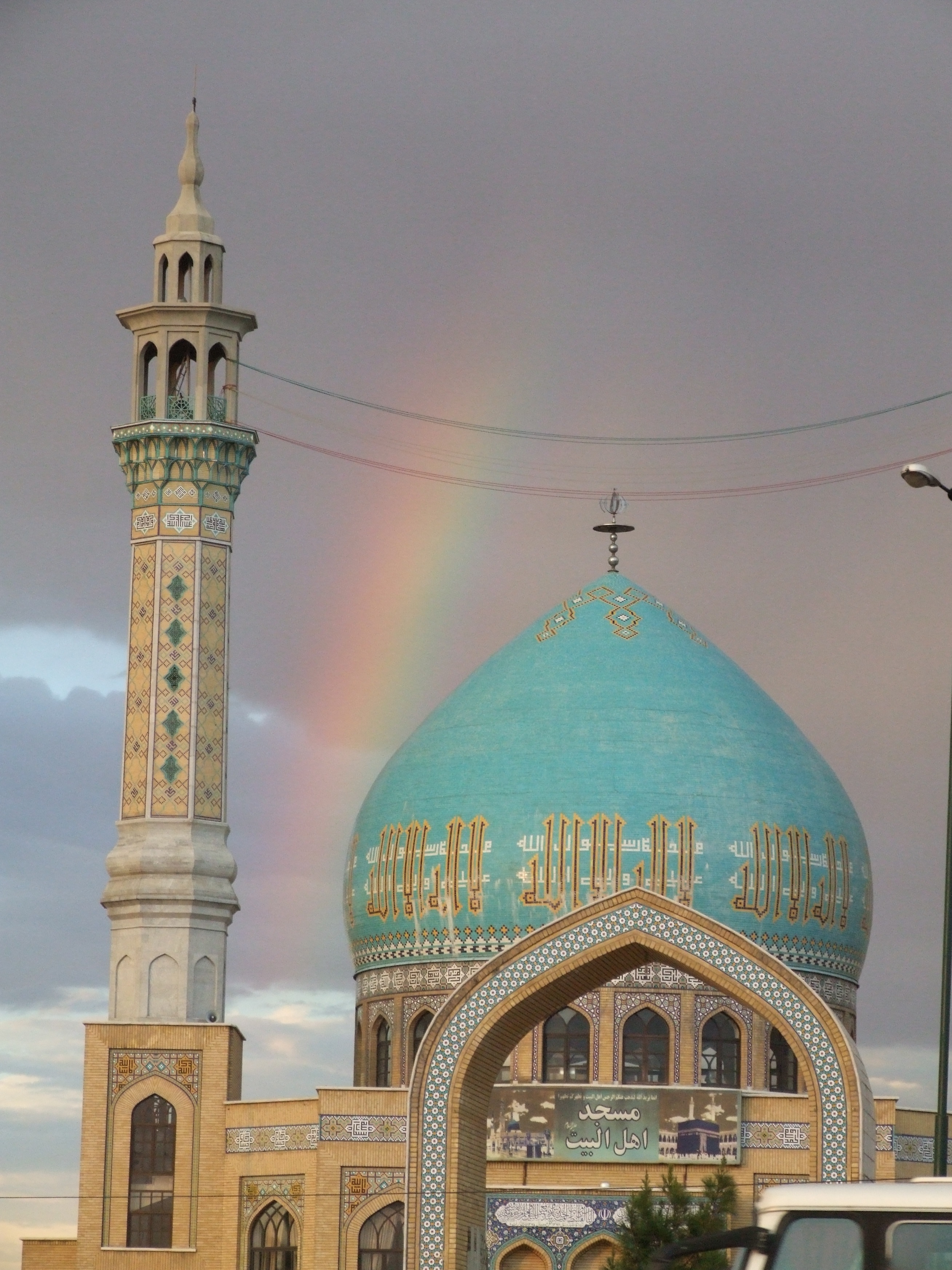
Mosque

Today I feel as if I visited South Asia for two hours. Last night I received an email from CAIR (Council on American Islamic Relations) mentioning that its Executive Director-MI, Dawud Walid, was going to give a lecture at the AMDA Masjid about the importance of recognizing and properly addressing extreme religious rhetoric in Islam. I met Mr. Walid a few years ago. He and I have spoken at some of the same conferences and he is part of a documentary that I’ve been working on. We once talked about the possibility of doing a type of forum to open up dialogue between Muslims and Christians here in Michigan. Noticing today’s lecture was going to be only minutes away from home and liking the subject matter, I decided to go. Well, I was in for a big, but pleasant, surprise.

As soon as I entered the masjid, I saw people taking off their shoes at the door, women wearing head scarfs and kurtis, and a gold-colored silk curtain partially separating the men from the women and children. I have been in a mosque, which is similar to a masjid, once before when I was in London, so it was not a real shock. However, given the announcement of the “lecture” I was expecting a different setup. I asked the women who were warmly greeting me whether it was okay for me, as a Christian, to be here. They said, “Yes, definitely. Please feel at home.”

I took off my shoes, wishing I had worn my better socks, and although no one batted an eye, I respectfully put my long hair in a bun. I joined the ladies on the beautiful burgundy rug with beige and light green decorations. A number of the women approached me to introduce themselves and answer questions I had. From them, I learned that many of the attendees were Bengali, but there were others from countries in South Asia. This masjid has been around for approximately three years, but it’s temporary. A larger one is being built a few miles further north. It’s always available for prayer but on the first Friday of every month, there’s a community gathering where everyone brings food and eats together, then prays, then listens to the speaker of the month give a lecture.

The conversations around me were similar to all women topics – nails, weddings, etc. All the young ladies were university students. The food was heavenly, the call to prayer reminded me of my childhood days in Baghdad, and the lecture was something we don’t hear about in non-Islamic media outlets. Mr. Walid talked about the importance for American Muslims having good manners towards differences of opinion.

“In other Muslim communities around the world, each town and village may follow one school of thought,” he said. “But there’s a diverse pluralistic community called America where many different ethnicities live. So we have to open our minds and be flexible to others’ opinions. Just because we don’t understand something does not make it wrong or un-Islamic.”

He encouraged for people to instead give advice, if they’re qualified to do so (he noticed the worst debates on Islam are those who know nothing about it) in the manner the Quran asks for – with tenderness and gentleness so that they do not commit verbal aggression on each other and so no one feels slighted or embarrassed.

“In Islam there are some things that are non-negotiable, but most are flexible. We shouldn’t let our small differences disunite us as a community. Scholars debated centuries ago about such matters as whether the Quran is a word of God or if it the creation of God, and about other matters. They never sorted out those questions so we don’t have to get bogged down about it.”
Another quote he used from the Quran was “Let there be no compulsion in religion because right action is clear from error” – meaning, anytime we use pressure to make someone do something against their will, they will naturally hate it.

I have so much more to say about this experience, but I have already gone over the limit of how long I want my posts to be. So I may just have to pay the masjid another visit in the near future.