Cultural Glimpse

Enjoying diversity

Tag: Middle East

Easter Egg Coloring Burnout

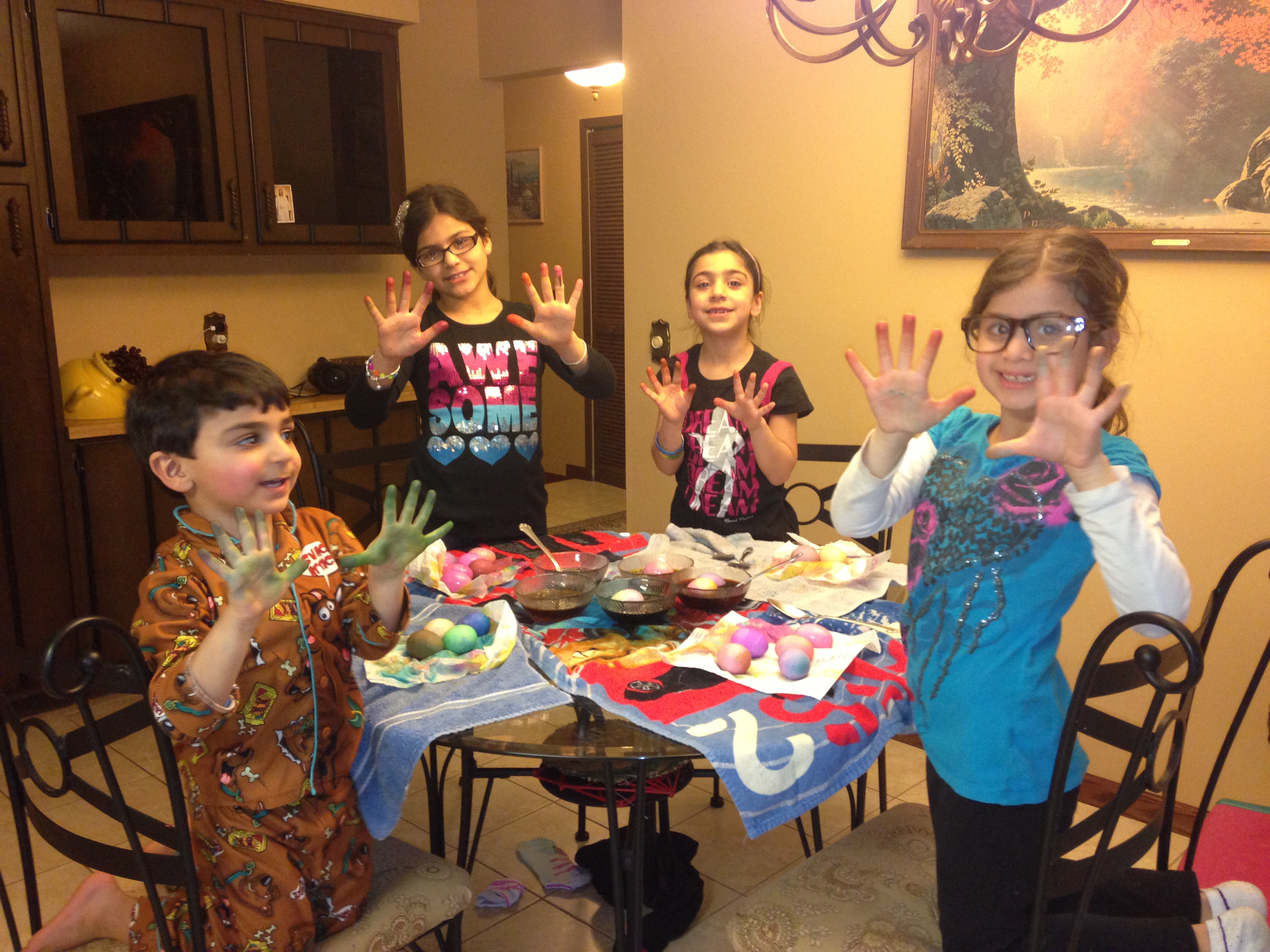
Easter is coming up so I did what mothers do days before the great holiday – I had my kids color eggs. I prepared the table, had the six color dying tablets ready, adding a tablespoon of vinegar to make the colors more vibrant. Everything was perfect until my oldest niece, in an attempt to help me, knocked down the crystal bowl of green water. My entire kitchen tile was green and had shinning tiny crystal scattered throughout. I warned the kids to keep their feet on the chair as I cleaned up the mess. My niece rushed to the bathroom where I suspect from the length she stayed there, she was crying.

My son was crying as well. “I wanted the color green! It’s my favorite color!”

My mother tried to help by asking irrelevant questions like, “Why did you pick today of all days to color eggs?” And, “Why don’t you see why your son is crying?”

I gritted my teeth and brought everyone sandals as I continued to scrimmage for glass on the floor. In no time I heard complaints of “The eggs are finished! Bring us more!”

As if I could simply turn on the faucet and boiled eggs pop out.

On a more pleasant note – the custom of the Easter egg originated amongst the early Christians of Mesopotamia, who stained eggs red in memory of the blood of Christ, shed at his crucifixion. The Christian Church officially adopted the custom, regarding the eggs as a symbol of the resurrection; in A.D. 1610, Pope Paul V proclaimed the following prayer.

Eggs, in general, were a traditional symbol of fertility, and rebirth, pre-dating Christian traditions. The practice of decorating eggshell is ancient. Ostrich eggs with engraved decoration that are 60,000 years old have been found in Africa. Decorated ostrich eggs, and representations of ostrich eggs in gold and silver, were commonly placed in graves of the ancient Sumerians and Egyptians as early as 5,000 years ago.

Have a wonderful Easter everyone!

Easter Egg Coloring 2013

Mommy and Daughter at Work

Like many of the women in my family, my cousin Amy is very creative.  Her twelve year old daughter has been following in that creative path since she was five or maybe younger. So when my kids and I went to their home yesterday to get a pedicure and a manicure for myself, I found the mommy and daughter team hard at work on yet another project (my cousin does umpteen creative things).

To the backbeat of Arabic music, she and her daughter were making jewelry for a women’s show she is involved in at St. Marino’s coming up on April 9th. Some of their stuff is really unique – such as the custom made rosaries that can be worn as a necklace or placed anywhere, like the car’s rear mirror, which Chaldeans are famous for doing. Each rosary is specialized with an entire family’s individual names. I love that!

As my cousin’s orange winged Amazon, Parker, gets to sit in a cage overlooking the attraction, it’s not difficult for him to announce his needs. Hey, orange winged Amazons have to eat too!

Parker

The Way to a Man’s Heart…

When she first met him, my cousin’s husband was a top chef at a Coney Island. Over the years he changed his direction to car mechanic and body shop. He has been great at both jobs, but he has never lost his love for good food and participating every now and then in the kitchen. Actually, he taught my cousin quite a few delicious recipes – guess to make sure he is dined properly for the rest of his life.

I think that no matter what your ethnicity may be, there is a possibility to get to a man’s heart through his belly. But to keep his heart, you definitely have to do a lot more than that, one of which is to continue serving good food and not resort to frozen dinners and fast food once the guy falls head over heels with you. Furthermore, food as a bait to gain one’s love is not reserved for men only – it’s a great way to get through the hearts of your children, relatives, and business acquaintances.

“Cooking is like love — it should be entered into with abandon or not at all.” Harriet Van Horne

Great Belly Dancing Man

Many feel that dancing is a healthy form of getting rid of stress.  Today, belly dancing has been adopted by nations all over the world, and is seen as more of an art form than as entertainment. According to an article written by Farhad Peikar, in China belly dancing has become a favorite among the youth, and not just for girls. Boys are equally receptive of the new dance and have joined studios in major cities.

I think the guy in this video would be a great candidate for teaching belly dancing.

Partying Arab Style

Dancing the Depka

In celebration of finishing the first-draft of my book and as a belated Valentine’s Day outing, I wanted to go to Lazeez, a Middle Eastern nightclub. My sister’s husband operates Lazeez, which is in Livonia. It’s a chic table-seating nightclub with a live band, great food and the wonderful smell of nerguila (water pipes).

We were a large group of siblings and their spouses, but no one knew about me finishing the first draft of my book. I didn’t want to talk or think about books last night. I just wanted to have fun. And it was fun. We enjoyed heart-felt music, we laughed, we danced, and we got home later than we’re accustomed to.

Middle Eastern music influenced (and has been influenced by) the music of Greece and India, as well as Central Asia, Spain, Southern Italy, the Caucasus and the Balkans, as in Byzantine music and Chalga. As for dancing, there’s a growing body of evidence that the thousands year old belly dance moves date back to Neolithic times and the Goddess-based cultures that existed then.

There’s also the depka, a line dance that forms from right to left. The leader of the dabke heads the line, alternating between facing the audience and the other dancers.

Yes, it was a very fun Saturday night, except the party when on the way home someone vomited in the car, my car.

Council on American Islamic Relations (CAIR)

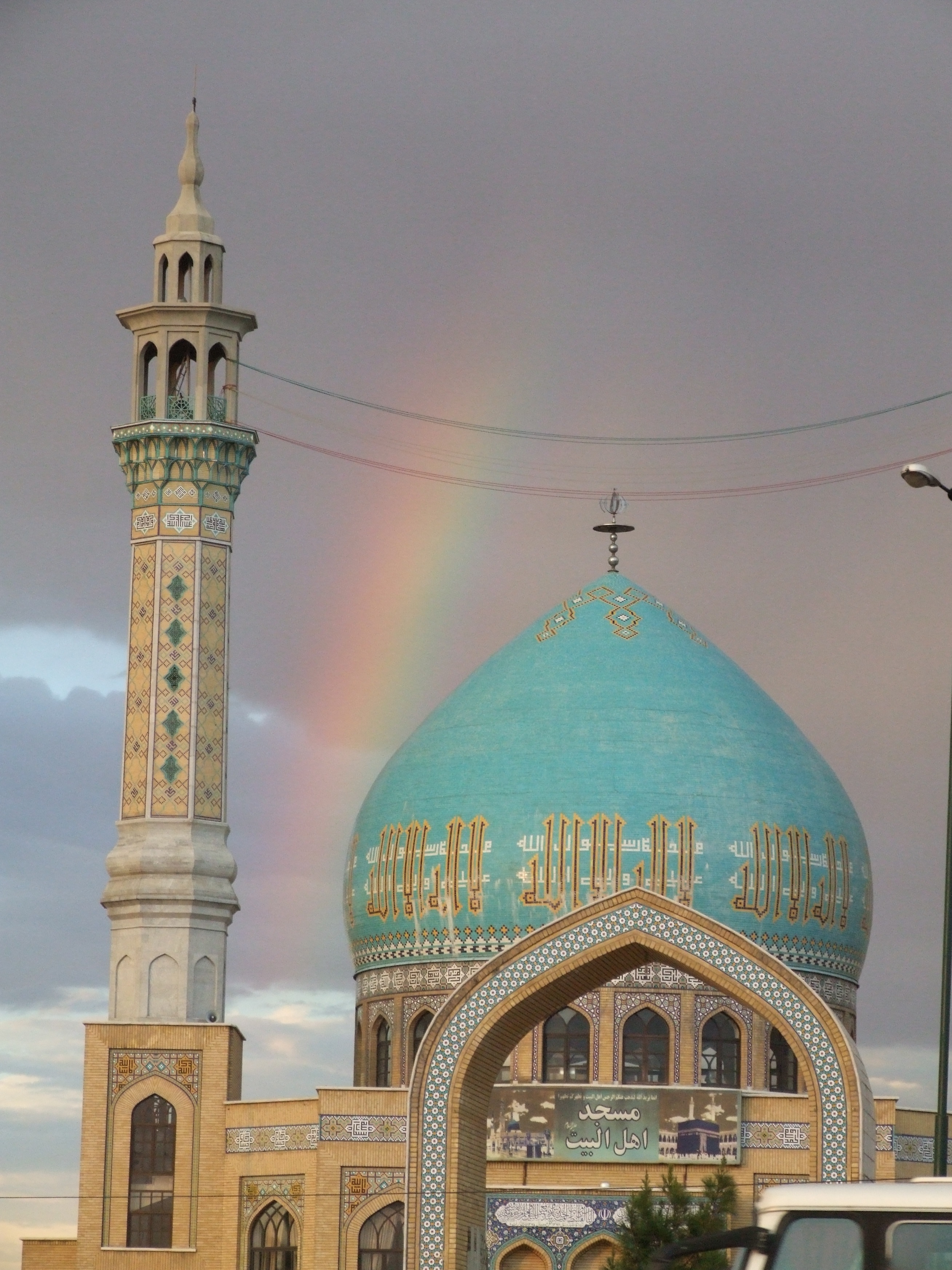
Mosque

Today I feel as if I visited South Asia for two hours. Last night I received an email from CAIR (Council on American Islamic Relations) mentioning that its Executive Director-MI, Dawud Walid, was going to give a lecture at the AMDA Masjid about the importance of recognizing and properly addressing extreme religious rhetoric in Islam. I met Mr. Walid a few years ago. He and I have spoken at some of the same conferences and he is part of a documentary that I’ve been working on. We once talked about the possibility of doing a type of forum to open up dialogue between Muslims and Christians here in Michigan. Noticing today’s lecture was going to be only minutes away from home and liking the subject matter, I decided to go. Well, I was in for a big, but pleasant, surprise.

As soon as I entered the masjid, I saw people taking off their shoes at the door, women wearing head scarfs and kurtis, and a gold-colored silk curtain partially separating the men from the women and children. I have been in a mosque, which is similar to a masjid, once before when I was in London, so it was not a real shock. However, given the announcement of the “lecture” I was expecting a different setup. I asked the women who were warmly greeting me whether it was okay for me, as a Christian, to be here. They said, “Yes, definitely. Please feel at home.”

I took off my shoes, wishing I had worn my better socks, and although no one batted an eye, I respectfully put my long hair in a bun. I joined the ladies on the beautiful burgundy rug with beige and light green decorations. A number of the women approached me to introduce themselves and answer questions I had. From them, I learned that many of the attendees were Bengali, but there were others from countries in South Asia. This masjid has been around for approximately three years, but it’s temporary. A larger one is being built a few miles further north. It’s always available for prayer but on the first Friday of every month, there’s a community gathering where everyone brings food and eats together, then prays, then listens to the speaker of the month give a lecture.

The conversations around me were similar to all women topics – nails, weddings, etc. All the young ladies were university students. The food was heavenly, the call to prayer reminded me of my childhood days in Baghdad, and the lecture was something we don’t hear about in non-Islamic media outlets. Mr. Walid talked about the importance for American Muslims having good manners towards differences of opinion.

“In other Muslim communities around the world, each town and village may follow one school of thought,” he said. “But there’s a diverse pluralistic community called America where many different ethnicities live. So we have to open our minds and be flexible to others’ opinions. Just because we don’t understand something does not make it wrong or un-Islamic.”

He encouraged for people to instead give advice, if they’re qualified to do so (he noticed the worst debates on Islam are those who know nothing about it) in the manner the Quran asks for – with tenderness and gentleness so that they do not commit verbal aggression on each other and so no one feels slighted or embarrassed.

“In Islam there are some things that are non-negotiable, but most are flexible. We shouldn’t let our small differences disunite us as a community. Scholars debated centuries ago about such matters as whether the Quran is a word of God or if it the creation of God, and about other matters. They never sorted out those questions so we don’t have to get bogged down about it.”
Another quote he used from the Quran was “Let there be no compulsion in religion because right action is clear from error” – meaning, anytime we use pressure to make someone do something against their will, they will naturally hate it.

I have so much more to say about this experience, but I have already gone over the limit of how long I want my posts to be. So I may just have to pay the masjid another visit in the near future.