The Iraqi Young Leaders Exchange Program (IYLEP) is a four-week summer exchange program in the United States, which brings English-speaking high school students from Iraq to explore the themes of leadership development, civic rights and responsibilities, respect for diversity, and community engagement. On the exchange funded by the U.S. Department of State, competitively selected American students join Iraqi participants in some of the U.S. based activities.
Participants are between the ages of 15 and 17 and are recruited from all provinces in Iraq. Iraqi adult chaperones/mentors will accompany the students, and are educators or community leaders who work with youth and have demonstrated an interest in promoting youth leadership and social development.
The program continues after the U.S. based exchange with follow-on activities in the participants’ home communities, including through alumni activities focused on leadership development.
Program Cycle
Students travel to the United States in July/August to spend the initial two weeks at World Learning’s Graduate Institute in Brattleboro, Vermont; followed by two-week homestays in cities across the United States (including Ann Arbor, Michigan); and conclude their program in Washington, DC.
Alumni conferences following the exchange may be held in Erbil, Iraq.
Program Goals & Objectives, as defined by the Department of State
The goals of the program are to:
Promote mutual understanding between youth in the United States and Iraq;
Enable the Iraqi participants to understand civic participation and rights and responsibilities in a democracy;
Promote community engagement among Iraqi youth;
Develop leadership skills among Iraqi and American youth; and
Foster understanding and relationships between people of different ethnic and religious groups.
Opportunities for American High School Students and their Families
Iraqi high school students will spend two weeks in Ann Arbor, Michigan, from July 9-23, 2016. The Iraqi students must stay with local families in a “home-stays” for the two-week period. Programming for the Iraqi and American students will involve leadership development training, team building, volunteering, participation in sport, music and/or arts programming and day camps, and facilitated discussions on current issues and select topics chosen by the students. There will also be optional sightseeing, shopping, museum visits, sporting events and other cultural/social outings on evenings and weekends. The American students who participate will receive certificates of completion for the leadership development and teambuilding workshops, and written acknowledgement of their 80 hours of volunteer service.
For more information about this opportunity, please refer to the following websites:
Yesterday Robert W. DeKelaita, an attorney who was born in Iraq, was found guilty of conspiracy to commit immigration and naturalization fraud for his Christian clients. This is the message he wrote on his Facebook page to the people: I am asking something of you. Don’t ever be afraid. When you fight, fight with courage. Did you see what they did to our ancestral lands in Assyria (Iraq)? They kicked us out and brought us here and look at what they’ve done to us here. Have faith in yourselves and have faith in me as an attorney who has fought until the last minute.
Mr. DeKelaita is an activist for Christian Iraqis and ironically his verdict came just as a book which I spent six years writing comes out. The Great American Family: A Story of Political Disenchantment was released this week. It is about a case that had all the political elements that Mr. DeKelaita’s had, which made me realize this: Although we came here for America’s freedoms, as an immigrant, I’m seeing how we are losing the very things we came here for.
This realization is the result of six years of research, which began the day a family approached me to write a story about their daughter, who was then serving a 6-year prison term. She was accused of conspiring to broker telecommunication equipment to Iraq during the sanctions. Unbeknownst to Dawn and the jury which tried her, her co-conspirator was actually a CIA operative. The project was sponsored by the United States to listen in on Saddam and his men.
I was drawn to this story and decided to write about it as a cautionary tale. Through the lens of a single case, I touch on a number of important issues that are robbing American families from living the American dream: a criminal justice system that is based on greed and profit; big lies that lead to wars, sanctions, terrorism and other costly consequences; a democracy that is based on double standards.
One thing I learned in Lynn Andrews’ shamanic school is that if you feel something is missing in your life, become that something. In October 2014, I was at one of our gatherings with Lynn in L.A., and I asked whether there’s a council in Michigan that I can join. There are numerous councils in the United States and abroad that come together every month and pass on the teachings of Lynn and the Sisterhood of the Shields.
I was told there is not one in Michigan, and someone easily suggested, “Why don’t you start a council?”
So I returned home and started the Ancient Wisdom Council in early 2015. Each of our gatherings have had a unique, magical, and learning experience. Last week, during our April gathering, my council had the honor of receiving the Rainbow Bridge Altar Cloth, which was weaved together in 1990 at one of Lynn’s gathering at Joshua Tree. Since the time the cloth has been made, it has traveled the four directions, to the councils and certain individuals all over the country. This year it is also traveling in Europe. June Milich, the woman who weaved it wrote, “A journal travels with the cloth each year, carrying many of the magical stories which have been weaving themselves into the cloth.”
She adds, “In my heart I know this rainbow colored cloth is meant to be an inspiration – a bridge from what is now to what can be, a bridge from feeling separate and alone to feeling whole and all one.”
This, in my opinion, is a definition that also applies to the teachings of the Sisterhood of the Shields. And this is what the women experienced at the Ancient Wisdom Council gathering as they wrapped the rainbow cloth around them and, those who brought them, around their children.
Fourteen young women from across the United States representing different regional ethnicities of Iraq competed for the title of Miss Iraq USA on March 12. More than 700 people attended the event at Bellagio Banquet Hall in Sterling Heights.
The goals of the event were to promote culture and heritage, create a positive image of Iraqi women to the world, and inspire Iraqi women to compete internationally. To qualify, girls had to be single and living in the United States for at least a year, never been married or have children, between the ages of 18 and 27, and have at least one parent born in Iraq. The winner received nearly $10,000 in gold jewelry, gift cards and other prizes.
“This has been an amazing and humbling experience,” said Melinda Toma, 22, former Miss Iraq USA and currently a pharmacy student. Toma, who was born and raised in the U.S., said being crowned Miss Iraq USA gave her many opportunities and helped her gain much more confidence in herself. “I used to be very shy and timid, but not anymore,” said Toma, who in May will visit an orphanage in Costa Rica to do volunteer work.
Ebtissam Khanafer, CEO of Yallafan Productions and Miss Iraq USA, trained the contestants and hosted the show. For one week, she not only taught the women poise and etiquette, but also the history of their ancestral land, even though she herself is Lebanese.
“We all come from the same part of the world,” she said. “We are all one.”
Lebanon is mentioned more than 70 times in the Old Testament. The New Testament has many passages that talk about Jesus and his disciples traveling quite a bit in Lebanon, which was then called Phoenecia.
“I taught the girls historical facts about Mesopotamia that their parents did not teach them,” Khanafer said, listing the names of Sumerian queens, geographical references about the Fertile Crescent, and the fact that Babylonians made more than 150 different types of bread.
Khanafer said that Miss Iraq is not all about beauty, makeup or body size.
“It’s not about the crown,” she said. “It’s about your personality, what’s in your mind and the legend you will leave behind.”
Lilian Farook, 20, has only been in the United States for one year but she left Iraq 15 years ago, traveling through Syria, Turkey, Lebanon and Egypt to come to America. She participated in the pageant because, she said, “I want to do anything positive for my birth country.”
In the beginning of the show, the girls came out wearing similar dresses (first all in white, later all in red) that were provided by Betsy’s Bridal. Later they wore traditional dresses that represented their ethnic backgrounds and at the end, they wore evening dresses. They were questioned by the judges on women’s issues and, in the second round, each was asked, “If you had something to say to the Iraqi government, what would you tell them?”
“I would tell them not to forget where they came from, the Cradle of Civilization,” said Sarah Idan, 26, who went on to be crowned the winner. “We came from the Babylonians, the Assyrians, the Jewish. We came from diversity and Iraq is diverse. I would tell them that this is a country for all Assyrians, Arab Muslims and Jews. We must respect each other and live in peace.”
While some Assyrians in the crowd were excited that she mentioned them — and some Chaldeans did not like that she did not mention them — Idan said she did not mean to exclude or emphasize any particular group and had no clue of the rift between the two communities. She is a Muslim who was born in Baghdad, came to the United States in 2009, and now lives in Los Angeles. No one knew of her background until after she won the title because she labels herself a “Babylonian.”
Idan currently has an administrative positive at a real estate company and is studying business, but plans to switch to media. Her many interests and talents include playing the guitar, piano and harmonica. She writes her own music and also sings in Arabic.
“I was not at all expecting to win,” she said. “I figured since no one knew me in Michigan, why would they pick me?”
She participated in the pageant, she said, because she hoped that by doing so she could achieve her goal to start a nonprofit organization to help people in Iraq suffering from mental illness.
“Having gone through what they went through, many are stressed, angry, sad and depressed,” Idan said. “Nobody wants to talk about this because in Iraq, depression is viewed as shameful, but it’s a serious health issue that needs treatment. Many young girls are joining militias as a result of mental instability.”
A strong believer in equal rights, freedom and education, Idan believes that Iraq would be great if it could achieve those three characteristics.
“It’s not just the government’s fault but it’s also the fault of the people,” she said. “They have to become independent thinkers.”
This article was originally published by The Chaldean News http://www.chaldeannews.com/stop-this-horror-says-visiting-congressman/
U.S. Republican Congressman Jeff Fortenberry (R-Nebraska), a strong proponent of using the term “genocide” for what ISIS is doing to religious minorities in Iraq and Syria, visited with leaders of the Chaldean community on March 3 at the Sterling Heights’ Chaldean Community Foundation office.
Fortenberry said he is committed to getting the Obama administration to label what ISIS is doing in Syria and Iraq genocide. (Editor’s Note: A week after this meeting, the Obama Administration did in fact declare the situation a genocide.)
“What will happen if the term ‘genocide’ is passed?” asked Anmar Sarafa, president and CIO of Capital Management. “Will the U.S. ultimately provide protection?”
“This will bring awareness and raise consciousness on an international scale,” replied Fortenberry. “When you have the label of genocide, at least you have a gateway to possible policies that would provide protection and integration back into the society.”
In recent testimony on Capitol Hill, Gregory Stanton, president of Genocide Watch and a research professor at George Mason University, explained that “genocide” actually means the destruction of people, which thus therefore improvises the entire human race. “Our conclusion as genocide scholars is that when lesser terms, weaker terms are used, it is a sure indicator of an unwillingness to act,” he said.
“As a result of this label, people will be able to potentially return to their rightful land,” said Fortenberry, adding, “I feel that the Nineveh Plains ought to be a safe haven so that Christians will be close in proximity and can easily return.”
Fortenberry has had a long interest in the Middle East. At age 18, he went to the Sinai Peninsula, where in 1973 Egypt, along with Syria, launched the October War, a surprise attack to regain part of the Sinai territory that Israel had captured six years earlier. His interest in that region, he said, along with the hype of the Iraq War, made him feel responsible to immerse himself into Middle Eastern affairs.
“The rise of ISIS – the eighth-century barbarity with 21st-century weaponry – has jarred our world and our country,” he said. “What we have to do is join our thoughts collectively to stop this horror, which is undermining our civilization and which is also tied to our national security. The way America works is that you have to engage and you have to engage in numbers.”
Joseph Cella, senior advisor at In Defense of Christians, applauded the congressman for concentrating on an issue that “shamefully has not been given its deserved attention.”
“The world is full of problems,” noted Frank Jonna, CEO of Jonna Companies, “What will distinguish this issue from other issues? What will give it the attention it needs?”
Fortenberry replied, “I was in the room when Pope Francis was given a small cross worn by a Christian man who was killed by a jihadist who told him to convert or die. The man chose Christ, his ancestor’s faith, and he was beheaded. His mother was able to obtain his body and she later fled the country. The horrors of what’s happening to the people have caused us, as an international people, to find ways to help them.”
Martin Manna, president of the Chaldean American Chamber of Commerce and a Chaldean News co-publisher, noted that of the more than 2,100 Syrian refugees who entered the United States since Syria’s civil war began in 2011, only 53 are Christians. The rest are Muslim.
“There definitely seems to be partisan favoritism here, discriminatory practices against minorities,” said Manna.
“I have raised this issue with the State Department,” said Fortenberry. “But normally Christians don’t flee to refugee camps because it’s too dangerous for them. They usually go to churches and other safer places.”
“Do you believe that it’s our failed policies that put our brothers and sisters in the hands of these butchers?” asked George Brikho, a former Republican candidate for the U.S. House of Representatives.
“Our foreign policy is exhausted and needs to be reset,” said Fortenberry. “There was a noble belief that Iraq would turn out different. Then we pulled out our troops, which I did not agree with, and created a vacuum. We have to think big, collectively and creatively, and this is starting to work. The problem is that our brothers and sisters are suffering in a faraway land.”
“If we topple [Syrian President Bashar] Asaad, not that he’s an angel, isn’t that going to be a lot worse for the people in that area?” asked Brikho.
“Congress rejected the president wanting to bomb Asaad for this reason,” said the congressman. “Asaad is barbarous toward his people, but if he’s gone, could that area be potentially worse? Do we want him to stay in power? No! Do we want him to successfully transition out of power where jihadists won’t be able to run wild? Yes.”
“Why hasn’t the evangelical community gotten involved in this?” asked Manna. “You don’t see them having that same passion for Christians as they show for issues concerning Israelis.”
Fortenberry advised the community leaders to visit evangelical sites and ask them this question, to see how they can come on board for this cause.
“Why aren’t the Muslim leaders, if they’re offended by how the world views them, rise up against ISIS?” asked Sarafa.
“There are people that try to do that but I’m in those circles a lot more frequently and have the opportunity to hear them,” said the congressman.
Fortenberry reminded attendees that the very source of our culture and faith is under threat so people have to work hard to restore it.
“All of you have a foot into two worlds,” he said. “You have a connection to your birthplace and you don’t like America to be beat up. The reality is that the world depends on America, but America will not tolerate you spreading political hatred behind our back and then saying, ‘We need you.’ Gratitude must be shown for what we’ve made and are willing to make for you.”
On Monday, March 14, the House of Representatives unanimously passed a resolution labeling the ISIS atrocities against Christian groups in Syria and Iraq “genocide.” Just a few days later, Congressman Dave Trott of Michigan and Knox Thames, appointed by President Obama as the first special adviser for religious minorities in the Near East and South/Central Asia, flew in from Washington to meet with members of the Chaldean Community Foundation.
The next steps for Iraqi Christians were addressed at the March 18 meeting in Sterling Heights.
“Chaldeans are like the Native American people of Iraq and Syria,” said Martin Manna, president of the Chaldean American Chamber of Commerce. “ISIS is not their biggest enemy. The Iraqi government is no better than ISIS and factors like property confiscation and intimidation have made us come to the reality that our people can’t live a peaceful existence with their Arab neighbors.”
Manna listed the many problems that Christians face inside and outside of Iraq, and asked, “What is the long-term solution?”
“There is a crisis for religious minorities in the Middle East, even for Muslims who want to challenge the status quo,” said Thames. “The U.S. has done a lot, is doing more than anyone else, but we need to do more. We can’t do it alone and we shouldn’t do it alone.”
Thames noted that the United States has been providing humanitarian assistance to Syrians and Iraqis, including to refugees and displaced populations, since the start of the crisis. The U.S. is also supporting resettlement as an important tool of protection for those who cannot return home or locally integrate, he said. Many of the refugees who have been resettled, or who are currently under consideration, are Christians, Yazidis and other minorities.
“But the policies have not worked so far,” said Manna. “We’ve seen a dramatic decrease in 2016 with the number of Christians coming here.”
Ismat Karmo, chairman of Nineveh Council of America, and Eman Jajonie-Daman, magistrate at the 46th District Court, said many refugees have complained that during their interviews, Muslim UN employees wrote incorrect answers that conflicted with their statements, or interpreters from Somalia or Sudan twisted or misinterpreted their words. As a result, they were denied refugee status based on misrepresentation. Many want to appeal, but in Muslim countries, how can Christians who claim that they’re discriminated against by Muslims win?
“People say, ‘Well, Iraq is a sovereign country,’” said Manna. “But we helped destroy it so we have to help fix it. Either help the Christians stay in Iraq or please help them get out.”
“We’re working on both,” said Thames and explained the ways the U.S. is doing so:
By pressuring governments to reform, so that restrictive law and policies are changed and members of religious minorities are able to practice their faith freely and peacefully.
By working to create and sustain the conditions under which religious minorities can remain in their ancestral homeland. For example, through coordinated airstrikes by the Counter-ISIL Coalition, the United States has acted to protect minority groups in imminent danger in Iraq and Syria.
By protecting everything from old manuscripts to churches.
“When cultural and religious heritages are removed to erase any history that they were there, people don’t want to stay in that land anymore,” he said. “In October, I visited with refugees in Lebanon and asked them, ‘Why did you come here?’ They told me that they have given up on Iraq.”
Salam, a 33-year-old man who has been in the U.S. for a year, was brought into the meeting to share his story of being detained for seven days by the mujahedeen and held for $15,000 ransom. As he waited for his family to raise the money, he, along with other hostages, was tortured until his wife and brother came up with $10,000. Because it was not the full amount requested, he had to endure further punishment. He sat on a chair while a religious man with a machete came next to him, prayed, read a verse from the Quran, and said that by Sharia Law, they had the right to cut off his left ear. He then cut his ear.
Salam lost consciousness and later woke up in the hospital. The mujahedeen had thrown him in the garbage and called his family to pick him up from there.
“This is heart wrenching,” said Thames. “I’m happy we’ve given him refuge here.”
“This is not a unique story,” said Jajonie-Daman. “It’s the norm. I once represented a kid whose face and body is so cut up, he looks like a map.”
“Under UN convention, these cases are hearsay until the person journeys to another country and registers his refugee status with the field office,” said Wendy Acho, director of Strategic Initiatives at the CCF. “But you should be able to get into the system from credible fear. The person shouldn’t have to illegally transport themselves to another country and endure all sorts of hardships.”
A suggestion was made to create a UN office in Iraq so that, at the least, people would not have to leave the country to come to the U.S., but could come directly from Iraq. Another idea was to hold a conference in Washington, where all political party representatives and religious leaders from Iraq could come to the table and discuss these issues.
“Seeing the U.S. government is serious about helping them would boost their morale,” said Karmo.
Thames took notes of all the recommendations and said he was looking forward to working with his new colleagues to address these challenges. But he reminded everyone that there’s no magic or silver bullet.
“Changes happen through small steps,” he said, “and through the works of such organizations as CCF and others.”
“I’m going to do something very radical in American politics, something very radical,” said Bernie Sanders when he took the stage at one of his rallies in Michigan. “I’m going to tell the truth.” Then he quoted Harry Truman, “I never gave anyone hell. I just told the truth and they thought it was hell.”
People cheered and I thought, we’ve come a long way. For decades, I watched as our leaders sedated people with the idea that we are better than any other country in the world. This larger-than-life belief makes a person too lazy to want to find out the truth for themselves and play a stronger role in their own destiny. And it makes it so easy for the government to justify their unjust decisions – like wars, sanctions, debt, imprisonment – with formal words and written documents. But now many have figured out this trickery. Many want leaders who will listen to them and not just wealthy campaigners.
Sanders said that although it’s difficult, “If we have the courage to look at our problems in the face, we can resolve them.”
Sanders then gave us a list of truths, and while that in itself was a radical thing, his ideas are really and simply called “democracy.”
Overturn Citizens United which essentially says that the wealthiest people in this country: “you already own much of the American economy. Now, we are going to give you the opportunity to purchase the U.S. government.”
“We are talking about a rapid movement in this country toward a political system in which a handful of very wealthy people and special interests will determine who gets elected or who does not get elected,” he said. “That is not what this country is supposed to be about. That was not Abraham Lincoln’s vision of a government of the people, by the people, and for the people.”
This has already created a rigged democracy where 58% of all middle class income goes to the top one percent of the wealthiest people. Hillary Clinton, for instance, was recently paid $225,000 to give a private speech at Wall Street.
“It must be a fantastic speech, an extraordinary speech, a Shakespearean speech,” said Sanders, “a speech which you must want to share with the American public.”
The average citizen is working the longest hours per year than any other industrialized nation. What does that mean?
Marriage suffers
Kids don’t get the attention they deserve
As we do so, we are paying “The major welfare abuser in America is the wealthiest family in America, the Walton family,” he said, accused the Walton family, which owns Walmart, of paying its own workers so little that they rely on welfare to get by. “And who pays for this welfare and food stamps? You do!”
Low-wage employers end up relying on the kindness of taxpayers, some $153 billion in 2015.
“On behalf of the Walton family, I want to thank you very much for your contributions,” he told the people. “It’s time for Walton family to get off of welfare.”
Invest in jobs and education, not jails and incarceration. Why is it that, in the wealthiest country in the face of the world, there are more people in jail than any other country on earth?
“Over the last 30 years, the war on drugs has ruined peoples’ lives,” he said. “Marijuana should be legalized not made equivalent to heroin. It should not be a federal crime. While whites and blacks use it just as much, blacks are arrested four times more. Drug addiction is a health issue not a criminal issue.”
Instead of building cells, he wants to build us freedom by:
Raising minimum wage
Raising Social security “The way to measure a country is by how it treats the most vulnerable amongst us,” he said. “And we do not treat our elderly well.”
Free healthcare – “There’s only one major country in the world without healthcare. You’re living in it!”
Free public college and university education – “Young people should not be forced to be hanged by their college tuition. We should not be punishing people [with debts] for getting an education. We have to think outside the box. Everyone knows that education and learning are inherent in being a human.
Paid maternity leave
Affordable daycare
Equal pay for women
“I know that every man in this room will stand with the women,” he said.
How will he do all this?
“Wall Street, through greed and illegal behavior, destroyed our economy and Congress bailed them out,” he said. So one way would be to make corporations pay taxes on all of the profits they have shifted to the Cayman Islands and other offshore tax haven, which Congressional Research Services estimates may currently create losses that approach $100 billion annually, and other loopholes. To learn of other ways, visit https://berniesanders.com/issues/how-bernie-pays-for-his-proposals/
So what’s the difference between him and Hillary?
Sanders depends on the $27 average donation from the American people whereas his opponents get millions from a handful of people (i.e. Hillary’s private speeches for Wall Street for $225,000).
Sanders voted against every single TPP trade deal, Trans-Pacific Partnership. Since 2001, 60,000 factories in America have been shut down. We’re in a race to the bottom, where our wages are going down. Hillary voted for every single one of them.
Sanders did not believe what Congress said about Iraq and voted against the war in Iraq.
Clinton heard the same information that he did yet voted for the war. She said she had gone to Henry Kissinger for advice.
“I find it rather amazing that Clinton boasts about the support of Kissinger, given that he’s one of the most destructive secretaries of state in the modern history of this country,” said Sanders. “Why would you go to the most destructive person for approval?”
What’s the difference between him and Trump?
“Our Latino brothers and sisters are tired of living in fear so we will create a comprehensive immigration reform,” he said. “In America, people are angry. We should take out our anger at the people responsible, not those who are scapegoats.”
Republicans say they believe in family values, and for that, they believe that
No woman should have the right to control her own body.
Gay brothers and sisters should not be able to get married.
“My wife and I believe in family values but they’re not republican values,” he said.
Not one republican candidate is willing to listen to scientists about climate change.
“That’s scary because you can’t do public policy unless it’s based on science,” he said. “Now everything Trump does is great and big and extraordinary and he’s also the greatest scientist and he decided that climate change is a hoax penetrated by the Chinese.”
Everyone laughed.
“This shocked me,” he said. “I thought it would be perpetrated by Mexicans or the Muslims.”
He said that more important than the polls, we will beat Trump because “We don’t want a president who insults Mexicans, who insults Muslims, women, or African Americans. Because togetherness Trumps selfishness. Love Trumps hatred.”
Yes, we don’t want a president that reminds me of the very one my family fled from 35 years ago. We came here for the democracy that Sanders is talking about, and however close he helps us get to it that is fine by me.
This country is becoming more undemocratic every day and that did not happen overnight. So restoring democracy will not happen overnight. But Sanders’ honesty, wisdom and intelligence will help us move in that direction, because as he says, after his disgust at the Flint water crisis which you’d think would only happen in third-world countries, “We have a moral responsibility to leave this planet healthy and habitable for our kids and grandkids.”
I want to share this powerful prayer, which for me reads like a poem, by Lisa Osina, author of A Wolf Song: A Story of Forgiveness. She too is a graduate of Lynn Andrews’ shamanic school and has been using words to spread awareness, joy and peace into the world.
She wrote this prayer in honor of Shabbat, an observance in Judaism that’s primarily a day of rest and spiritual enrichment. It’s a time when people set aside all of their weekday concerns, engage in restful activities, and devote themselves to higher pursuits.
Her sacred words help us see how our attachments to manifestation often spoil our peace and enjoyment (sometimes even our relationships).
* * *
Shabbat Shalom Olam
Friday, Saturday and Sunday are sacred days
Each celebrates and observes in their own way.
The common is prayer and each individual has a way.
I am working on shifting the way I pray and how the manifestation of Prayer requests happens.
The first thing I learned is that it doesn’t manifest.
Prayers are not ‘answered’ the way we’ve been told
Prayers do not bring health, happiness or good fortune.
Prayer opens a person to God, the Universe and the energies that rule our world.
When we pray to a force outside of ourselves our wishes and dreams become scattered and unfocussed because our intent gets lost in the thick of it,
Relying on another will only bring you their wishes.
My prayer today is for peace within me
Because we cannot expect peace in the world until we’ve come to peace with ourselves.
Oh dear great Sprit
What is it within me that holds the peace?
Where is it stored, how can I pull it out and share?
In this day when battles are raging inside and outside
I pray for the flower to bring beauty
I pray for the people to see it
I pray to be open to for what I don’t know
and let questions be answered with echoes and mirrors.
On this night of sacred air, soft rain and dew
I see the peace, I feel the peace
Oh Lord let me be the peace
To which Lord do I speak?
She lives in the cloud on the outskirts in shades of pink and purple
He lives inside the wolf beside me
They live amongst the fairies and the elves
Where wonder thrives and rules won’t go.
I dream of light, I dream of good
Where we open to love, she returns the food.
When we ask out loud, to whom do we speak?
But her tiny self inside the heart
Her womb is ready for birth.
Where wind blows and shifts my thoughts
Where rain washes away the sorrow
and Sunshine dries my spirit from wet rag to riches.
I pray, I honor, I trust
the new day will come and I accept the unknown it holds.
Chaldeans are an ancient people who trace their roots to Prophet Abraham as he was from Ur, land of the Chaldees. These are my ancestors and, for thousands of years, they have contributed a great deal to the birth of civilization. They were builders then and they are still builders today, despite the hundreds of years of oppression and violence they keep enduring.
After the Islamic State attacked the Christian villages of Iraq, the birthplace of my parents and grandparents, Christian Iraqis in the United States were outraged. They helplessly watched family, friends and relatives being forced out of their homes in the most inhumane way possible. Chaldeans, Assyrians, Yazidis and other minorities were kidnapped for ransom, or killed, and others were threatened to convert or die. Women and girls were captured, like slaves, and those who survived had nothing to their name but their identification cards. They left their homes and all their belongings and became refugees.
The leaders in our community immediately reached out to political figures in Washington to help the minorities during this dire situation. As ISIS destroyed historical sites and artifacts, artists took up their brush and rebuilt these monuments on canvas, more determined than ever to bring their history back to life. Myself, I picked up the pen and I wrote and wrote and wrote.
Aside from wanting to give our community a voice, I wanted to preserve our stories. I’ve always wanted to do that, but more today than ever. We have magnificent stories that are unheard and these stories are not necessarily about war, religion, or politics. They are about love, culture, courage, and triumph.
This weekend, my three novels are for the promotional price of $0.99 (eBook), so that they reach more readers, so that more people have the opportunity to learn about an ancient people that are not victims over their lives, but victors!
First day of filming The Great American Family, a documentary which is currently in post-production.
Most people know me as an author and journalist, but I’m also a filmmaker, one who has to almost work underground, using my own flashlight, like a miner. It’s difficult enough being a women filmmaker let alone one with Middle Eastern background. So when Chris Rock talked at the Oscars about the lack of blacks in Hollywood (in films, receiving awards, etc.) I thought, “They Have it Made – Compared to us!”
Over ten years ago I was at the Surrey Writer’s Conference in Vancouver and I met with three producers, one who’d produced Father of the Bride II, one who produced Pay it Forward, and the third, I forgot what he produced. Anyhow, I pitched to them and their reactions to my stories were quite unique. Even though the U.S. had been politically involved with Iraq for decades, even though my stories were of modern day Iraqis and Iraqi-Americans, these producers didn’t see how they could possibly adapt them into film.
“It would be difficult to cast an Arabic movie,” one said. “Who would we cast for the leading role? Tom Hanks?”
As if Tom Hanks is the only actor in Hollywood! It was not a problem to cast him in The Terminal, a sweet and delicate comedy, similar to my type of work – where Tom plays a man from the fictional country of Krakozhia who is stuck at John F. Kennedy International Airport. It was possible to cast Dustin Hoffman and John Travolta as women (Tootsie and Hairspray), but it is impossible to get a good actor to play a normal Arab?
Plus, the roles of “bad” Arabs have been easily played by other western actors, starting with Rudolph Valentino. In the 1920’s he starred in The Sheik and Son of the Sheik, two films which set the stage for the exploration and negative portrayal of Arabs in Hollywood films. They both represented Arab characters as thieves, murderers, and brutes.
Jack Shaheen, in his book Reel Bad Arabs, surveyed more than 900 film appearances of Arab characters. Of those, only a dozen were positive and 50 were balanced. Shaheen writes that “Arab stereotypes are deeply ingrained in American cinema. From 1896 until today, filmmakers have collectively indicted all Arabs as Public Enemy #1 – brutal, heartless, uncivilized religious fanatics and money-mad cultural “others” bent on terrorizing civilized Westerners
I didn’t make such remarks to that particular producer, who smiled at me as though I was a naive little girl. In the middle of our conversation, he had actually winked to his colleague, as if to say, “Isn’t she a darling creature to have such profound visions?”
I walked away, uninfluenced by their discouragement, but over the years, I saw how negative images keep certain communities in the dark and without a voice. When I watched the Oscars the other day and listened to the emphasis on the lack of black peoples receiving roles and awards, I thought, they have it made – compared to filmmakers of Middle Eastern and Arab backgrounds. For us, we can’t even get our stories in the industry let alone be given roles and win awards.
Stereotypical representations of Arabs and Muslims are often manifested in a society’s media, literature, theater and other creative expressions, and often have real repercussions for people in daily interactions and in current events. Though not legally prohibited, stereotyping could put innocent people in danger.
I’m glad that black people are at least bringing this subject to light, because for humans to survive, diversity must have a home. With millions of Middle Easterners living in the US, making them the fastest growing group of immigrants, and with so many social, political and religious issues regarding that region – Iraq in particular – happening on a daily basis, it is becoming absolutely essential for Hollywood to provide film audiences everywhere true stories of the lifestyle and culture of the modern Middle Easterner. In this way, cultures will develop a better understanding of each other, and thus, the world will be pushed into another, a more diverse reality.


 by The Chaldean News
  .S. Republican Congressman Jeff Fortenberry (R-Nebraska), a strong proponent of using the term “genocide” for what ISIS is doing to religious minorities in Iraq and Syria, visited with leaders of the Chaldean community on March 3 at the Sterling Heights’ Chaldean Community Foundation office.
 On Monday, March 14, the House of Representatives unanimously passed a resolution labeling the ISIS atrocities against Christian groups in Syria and Iraq “genocide.” Just a few days later, Congressman Dave Trott of Michigan and Knox Thames, appointed by President Obama as the first special adviser for religious minorities in the Near East and South/Central Asia, flew in from Washington to meet with members of the Chaldean Community Foundation.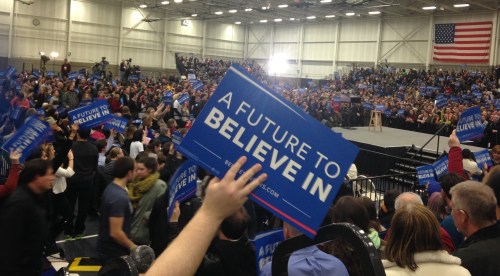



 Cultural Glimpse