Cultural Glimpse

Enjoying diversity

Cooking All Night Long

I’m beat. For the first time today my sisters taught me how to make kubba Hamuth, an elaborate staple of Iraqi-Jewish cooking. Kubba hamuth is meat stuffed dumplings that we freeze in large quantities and later cook in a savory soup. It took five women hours to make this food. Unfortunately, my mother was not able to help, but she was there watching and making remarks.

With my mother’s health recently deteriorating, it dawned upon me the importance of cooking the food that has been passed down for ages from one woman to another. Women of kin would often gather and knead the rice with meat until it becomes like dough, then stuff it with meat and onions. They made various traditional foods and afterwards, shared a meal – today for instance, we ate dolma (stuffed grape leaves and other vegetables) and an Indian dish I prepared. Then we had watermelon and white cheese.

Though right now I am really exhausted, the experience was oh so lovely! I can’t wait for the next traditional dish we prepare and freeze. More importantly, I can’t wait to pass on these recipes to my children.

Kubba

Crappy Sun

Crappy Sun

After a long day’s work of organizing my office and paperwork, cooking brussel sprout stew for lunch, preparing the stuffing for the grape leaves I will roll tomorrow, taking my son to school, dropping books and movies to Friends of the Library, taking the Ipad to get looked at an Apple Store, picking up my kids from school, coming home to feed the kids and out again to take my daughter to a Rock Climbing class while I exercise on the treadmill, then back at the house, preparing dinner for my husband, helping my daughter with her homework, researching for a possible weekend family trip, washing the dishes, on the way to taking out the garbage, I hear my son open the garage and yell, “I want Crappy Sun!”

I couldn’t help but smile. I didn’t correct him and say, “It’s Capri Sun.” I simply thought to myself, as difficult as it is sometimes to be a mom, with one word, one hug, one smile, our children can melt our hearts, make us remember how worth-while life is and how unnecessary it is to treat it too seriously.

E’Rootha’s 5th Annual Evening of the Arts

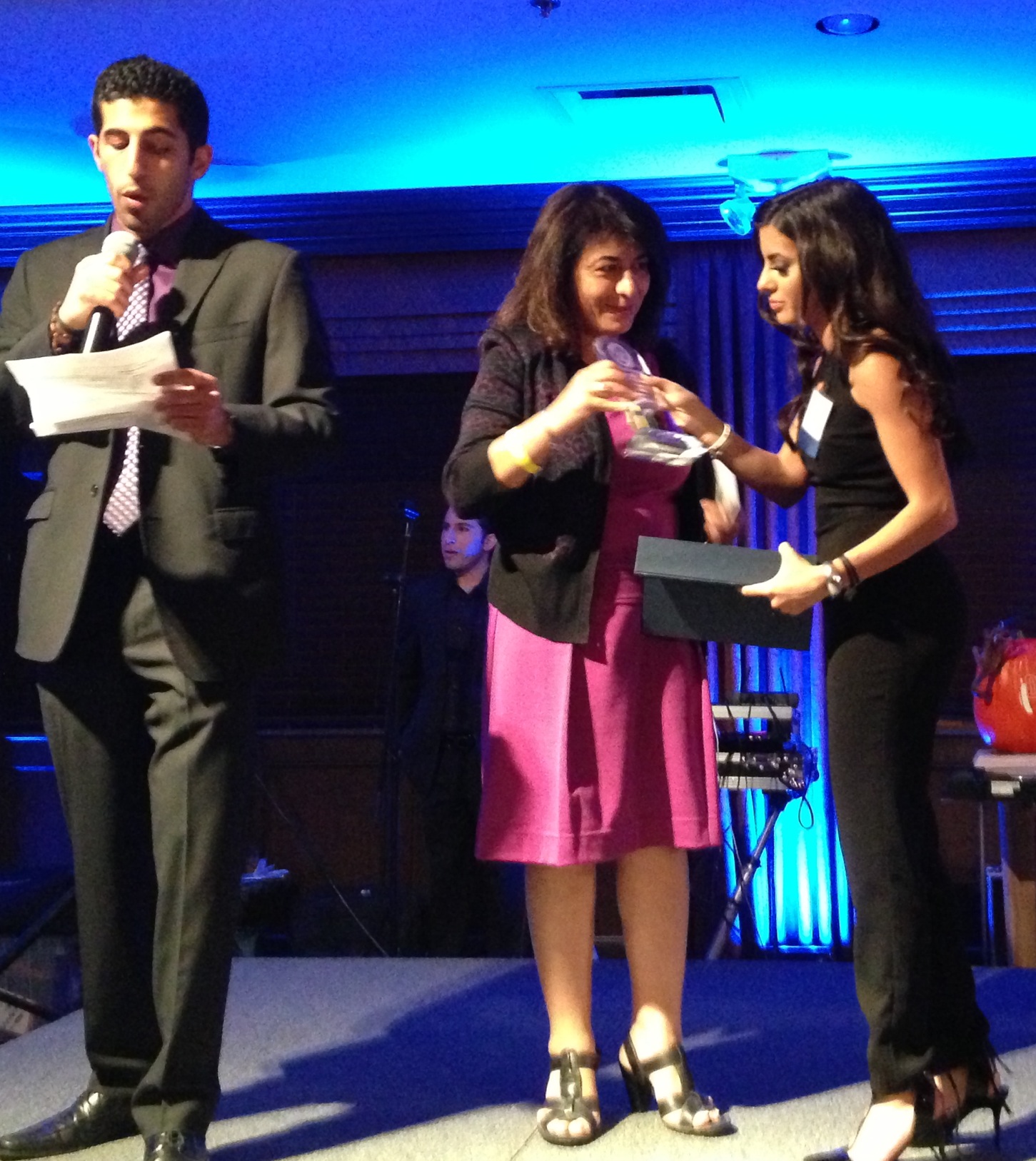
Dunya's Award

Again this year, the E’Rootha’s event brought to life Iraq’s rich cultural heritage with a beautiful program that included a strolling gallery and performing arts. Last year this organization honored me with the outstanding contributions of the arts award. This year the award went to a great and accomplished poet and a dear friend of mine, Dunya Mikhail – recent recipient of the Kresge Award (recent Kresge Literary Artist Fellow).

As I sat among the audience, I recalled years ago when I sat with a group of Iraqi-born artists and discussed ways to do what Matthew A. Kalasho, Executive Officer, says E’Rootha has been doing and intends to do more of – “to preserve our [Chaldean/Assyrian Syriac] history, language, culture, dance and our sense of community as we continue to grow and prosper in America.”

I realized and was happy that all along, our older generation and younger generation had the same desires, and shared similar dreams. I imagined how much farther we would go if we one day closely worked together. Since I’m an optimist, I see that happening very soon.

A Chaldean Henna Party with an Indian Twist

My cousin and his fiancée decided to have an Indian-themed Chaldean henna. I thought this a wonderful idea and an opportunity for me to buy my first sari.

For over five thousand years henna has been a symbol of good luck, health, fertility and sensuality in many parts of the world. The art of henna (called Mehndi in Hindi & Urdu) has been practiced in Pakistan, India, Africa and the Middle East, and it has led to “the Henna Night.”

The henna night is where the bride, her family, relatives and friends get together to celebrate the wedding to come. The vibrant and colorful night is filled with games, music and dance performances. Sometimes guests get henna patterns done on their hands.

In the old traditional way, the groom’s family would dance through the streets of the village until reaching the house of the bride. When the men enter where the bride is, the bride-to-be and groom-to-be are united. Their mothers then get both their hands done with henna. The bride-to-be usually gets gold jewelry as a gift. For Muslims, this is where the groom offers the bride her mahr, a mandatory required amount of money or possessions paid by the groom to the bride at the time of marriage, for her exclusive use.

Adopting beautiful traditions from other countries, while honoring one’s own traditions, is a profound statement. It is one way of saying “Namaste” to the world.

IMG_0222

Blissful and Guilt Free Baking

IMG_0176

When I asked my niece if she could watch my kids so I could run a quick errand, I was looking forward to returning to her house and enjoying one of her “Blissful” delights with my coffee. Well, I was not disappointed.

I was served gluten free quesadillas, chocolate chip bliss bars, and coco nut loaf. One was more delicious than the other but my favorite was the Salvadoran quesadillas.

“My mother-in-law has been making quesadillas for years,” she said. “When I went gluten free, I couldn’t eat it anymore so a few months ago, she agreed to give me the recipe.”

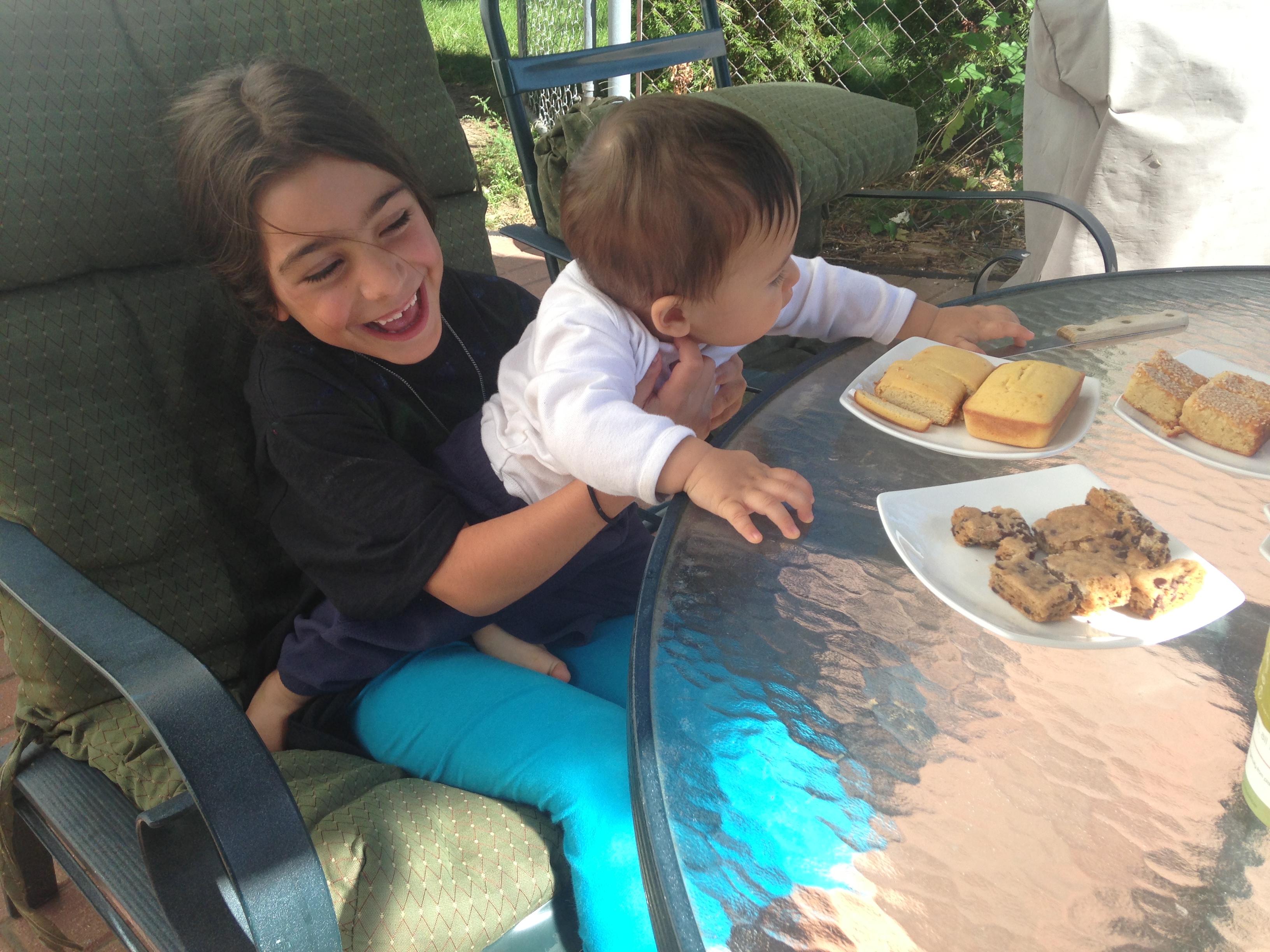
The two women spent time in the kitchen, holding the baby, who in this picture is happily grabbing for the big knife, while one taught the other how to bake quesadillas.

In the end, Sandy’s mother-in-law and husband loved the gluten free quesadillas and said, “They taste even more traditional!”

Cooking and baking is an important part of her husband’s family, who are originally from El Salvador. They are known for their famous Pilar’s tamales, which her husband makes and sells at Royal Oak Farmer’s Market Fridays and Saturdays from 7am-1pm.

Sandy sells her “Blissful Baking” delights at the Birmingham Farmers Market Sundays from 9am-3pm. Both the tamales and the baked goods come together at Henry Ford Hospital West Bloomfield on Wednesdays from 10am-3pm.

“When I bake, I think of people’s different health issues,” Sandy said. “I make recipes based on their needs or wants.”

With diabetes, allergies and obesity on the rise, even affecting young children, I hope that one day she would expand her business, even write a book about these recipes for those who have a sweet tooth but are restricted by their diet from having sweets.

What a Pro-Saddamist once said to me

SONY DSC

Maaloula, an ancient Syrian village with Christian inhabitants was attacked by rebels today. These rebels shot and killed people, and forced residents to convert to Islam.

Yesterday my cousin told me that he was nearly killed in a Baghdad bombing where 8 men died and 20 were injured.

“Since Saddam’s fall, you tell me where in the Middle East and Arab world has there been peace?” a famous local radio announce once asked me.

I did not have an answer for this man, who is known to be pro-Saddam and was once investigated just because, he said, “I did not have a dislike for Saddam.”

“I mean, isn’t this why we went into Iraq to begin with?” he continued. “So the world would be a more peaceful place?”

I still had no answer for this man. But these questions blink in my head each time I watch the Arab news channels and see violence tread the streets of the Middle East and Arab world, like a loose madman in search of blood.

If only men would stop trying to be heroes through war, and emulate Gandhi’s type of heroism.

Happy 80th Birthday, Mom!

#5

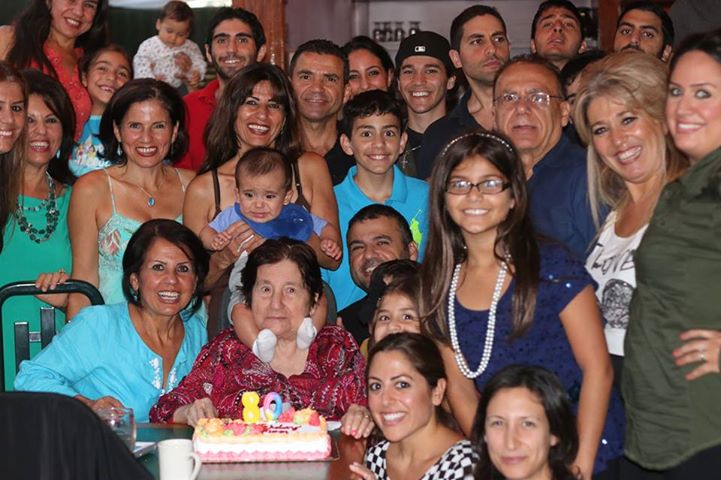
Millions of Iraqis, including my mother and three of my older siblings, have a July 1st birthday. However, that is not the real month and date of when they were born. Until the First World War, many people, especially in villages and remote mountain areas, never had any identification. They simply belonged to their families and tribes. Their language and culture were their identities. Later, many people did not register their children when they were born.

In 1958, Adul Kareem Kasem was making a census, population count. The government told everyone that they could not leave the house for several days. They went door to door doing a count. Anyone who didn’t have a birthday, they gave him or her a July 1st birthday.
“July 1st was the happy medium, and was an easy way to do everything,” my brother told me. He and my older sisters also received a July 1st birthday.

So, since technically we do not know when my mother’s 80th birthday is, we did not feel too bad that it got postponed from July 1st to September 15.

The Candle Dance

Weddings in the Middle East vary from country to country and even village to village. While the majority include Arabic songs, belly dancing and the depka (a line dance), each region has its own traditional dances, songs, and in some cases, their own language.

Yesterday I attended my friend’s Palestinian wedding. It was quite beautiful, held at a banquet center with an elegant décor, delicious cuisine, and a panoramic view of its lake and golf course. Towards the end of the party, luckily before we decided to leave, we got to witness the candle dance.

The candle dance is a procession of women led by the bride. She enters the banquet hall, accompanied by her mother and mother-in-law, walks to the dancing floor and takes turn sharing the candle dance with the women who love and support her.

I tried to research the history and symbolism of this dance. The only thing I found is this from the book “La Milenaria Danza del Vientre, el lenguaje oculto… de Amir Thaleb.”

“This dance was inherited from ancient rites and ceremonies that took place in sealed religious temples, the lighting of the candles have a purely mystical significance and is a way to provide spiritual light to the various events and deities. Today this dance is usually performed at weddings or baptisms as being a symbolic way of illuminating the newly betrothed or newborn in his new path to take.”

Amir Thalbe adds that “in all these dances, dating back many millennia ago it is impossible to define them in their real meaning.”

Well, as long as they are kept alive, those watching and participating in these sacred rituals can make their own definitions and meanings out of them.

Candle Dance

Documentary about my mom – Coming in September!

Mom (3)

Remember the three beautiful filmmakers from France who honored my home with their visit? Well, they just informed me that the documentary about my mother’s experience in attaining her US citizenship is coming out next month. It will be posted on their website, http://www.mybelovedenemy.com , sometime in September.

My Beloved Enemy is a project portraying Iraqi-American stories ten years after the start of the war. The film crew toured different parts of the United States to show the challenges and triumphs that various Iraqi-American individuals and families face.

With all the misconceptions and stereotypes that exist out there in the mainstream media, this kind of project is especially important today. It shows the everyday truth that is neglected, overlooked and undermined. Yet it is this truth that could help us put an end to unnecessary killings, even wars, that were ignited by misconceptions and stereotypes.

It is also important because in 2007, the U.S. refugee program began admitting Iraqis to the country, to date some 85,000. Still more are entering the United States every day. What better way to know the people who are to become our neighbors than to watch a real heartfelt documentary about them!

The Bharatiya Temple

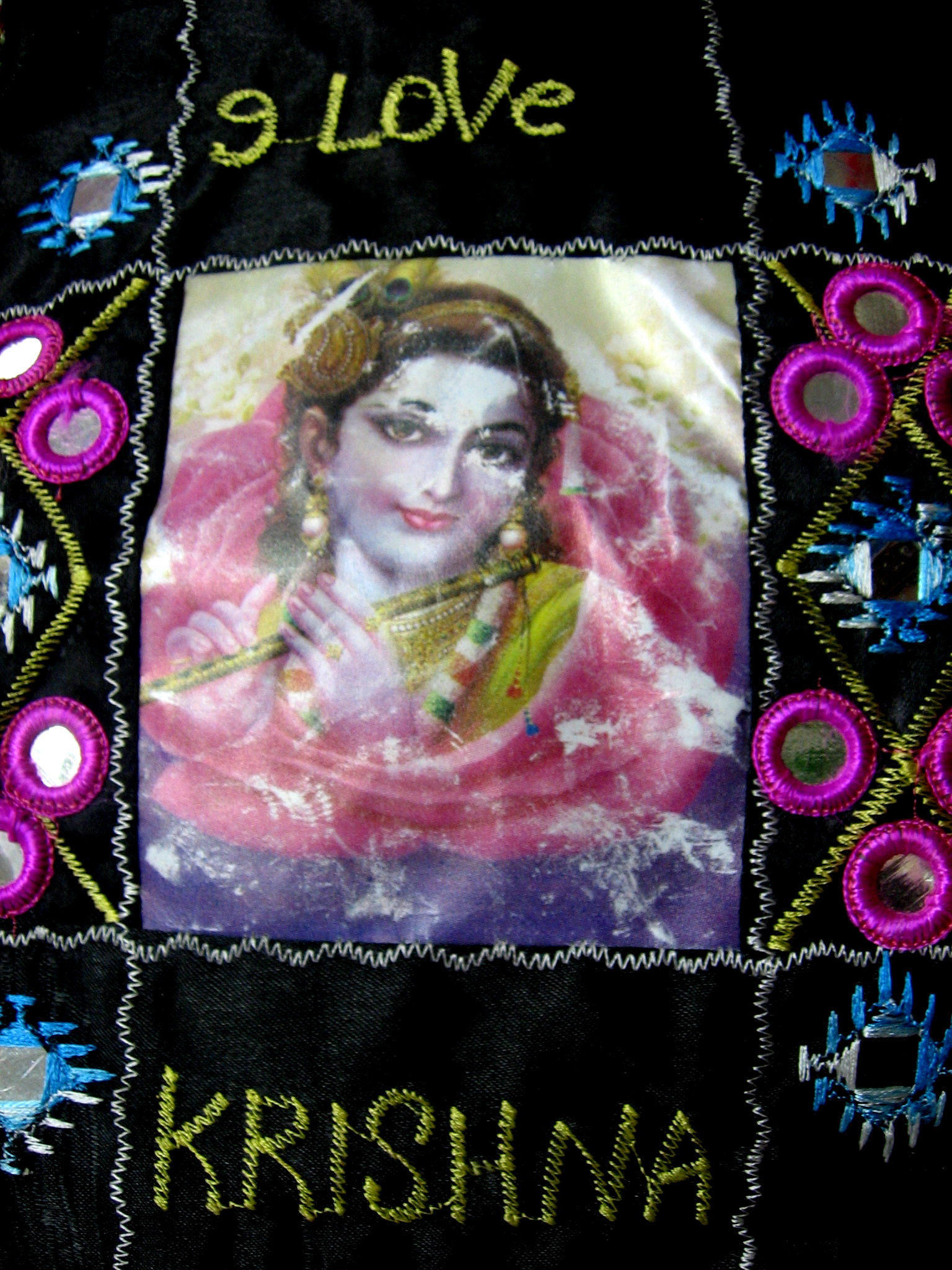
Krishna

This evening the Bharatiya Temple presented a program entitled Nritya Aradhana. I attended with my children and watched a performer dressed in traditional white and blue Hindu attire entrance an audience of about a hundred people with her unique moves and beauty. The dancer was decorated with gold, her long braid tucked beneath her belt, and her bare feet and hands painted red. The group of musicians and vocals were wonderful as well. So was the light food that for a minimal fee was served afterwards in the cafeteria. A spicy chai followed.

Aside from the program, I was impressed by the amazing infrastructure of the temple. One of the rooms in the building was set up with chairs dressed in gold covers.

“Is this for a wedding tomorrow?” I asked.

“Yes,” said one of the many women working in the hall.

Another nearby room was being filled with fresh flowers. Oh, how I wish I could attend this wedding and witness first-hand how Indians celebrated such a sacred occasion! Movies and youtube were not quite adequate enough to quench my curiosity.

On my way out, I learned that the temple offers a lot of services, such as yoga and meditations. Will likely revisit this temple sometime soon.