Cultural Glimpse

Enjoying diversity

Thomas Turns 50 Years old!

You wouldn’t think it by looking at him, but Thomas the Tank Engine is 50 years old. We celebrated his birthday (though we did not know it was his birthday) by going on one of his rides at Greenfield Village.

Thomas was born when Anglican clergyman, the Reverend Wilbert Awdry created him in order to entertain his young son Christopher, who was recovering from scarlet fever. Christopher, like all children, wanted the stories of the train engine to be repeated repeatedly. His father obliged. Mrs. Awdry believed so much in these stories that she encouraged her husband to publish them, and in 1945 the first of the Railway Series of books appeared.

After twenty six books, the Reverend called it quits and his son decided to continue to write stories for his son, creating ten more books. Sometimes less effort and more love create gigantic results.

IMG_1528

Maleficent is Magnificent

Maleficent_poster

When we decided to go to the movies, we split up. The men and boys went to watch How to Train Your Dragon 2, and my daughter and I went to see Maleficent which stars Angelina Jolie. It was her pick, and it was wonderful because aside from taking us into the enchanted world of faeries, it was not your typical prince saves the princess story. True love can and does save lives, and sometimes it comes from people you least expect.

In Maleficent, the moral of the story is that society’s greed – particularly that of patriarchy – is the villain that generates more villains. The pure of heart could either fall into the trap of having a bitter and vengeful attitude, or they could rise above it, and have victory over themselves!

That is the choice we make everyday.

Terrorists Won – Now We’re Really Safe!

Terrorists Won

Over the weekend, the second largest city in Iraq, Mosul, fell and yesterday Saddam Hussein’s home city of Tikrit has fallen. Is Baghdad next in line in what CNN calls “rapid takeovers”? So far, more than 500,000 civilians have fled the fighting that was brought about Islamic Militants.

My opinion? Joshua Blain described it best in his post to a CNN article:

“The reality is that this is all our fault. While Saddam Hussein was indeed a dictator and corrupt, he did not tolerate Islamic extremist groups in his country because they were a threat to his secular regime. Though a dictator, he maintained stability in the country and overall the people lived in peace and had a great education system. We then went in and destabilized the country by removing Saddam and leaving a massive power void, allowing extremist groups to flood the country. In essence we created the very environment we said we were going to eliminate. The great irony is that to the people of Iraq, we are the weapons of mass destruction.”

What “If Only” Moments Are in Your Life Right Now?

If Only

“Our Creator wants our ‘If only’ moments to become teaching moments,” said Pastor Marcus during today’s sermon at Freedom Christian.

The pastor shared how over a bad break-up, he had become sad, depressed, angry and bitter because he held on to one ‘if only’ moment rather than learn from it and move on.
“We use our ‘if only’ moments as an excuse not to take responsibility for our lives,” he said. “We say, ‘If only I had a different upbringing, a different past, or if I could clear up some things in my life, then I could have this or that, or have a relationship with my Creator.”

He told us the story of King David, who said to God, “If only you, God, would slay the wicked!” because King David felt that if God could do this one thing for him, he in return could do so much for God.

“When you identify what your ‘if only’ moments are and hang onto it, you get stuck in your struggles and pain because you blame someone else for your life,” said Pastor Marcus. “You do not take responsibility for your actions. You lose your dreams and hopes because it’s hard to look towards your future. You never progress emotionally and get stuck in immature ways of thinking.”

While Pastor Marcus would not trade his ‘if only’ moments, as they helped him be the man he is today, he also encourages us to have God help us turn our ‘if only’ moments into a teaching moment.

If only people would take this message seriously…

Dolly Parton’s Exquisite Pirates Voyage!

Pirates Voyage

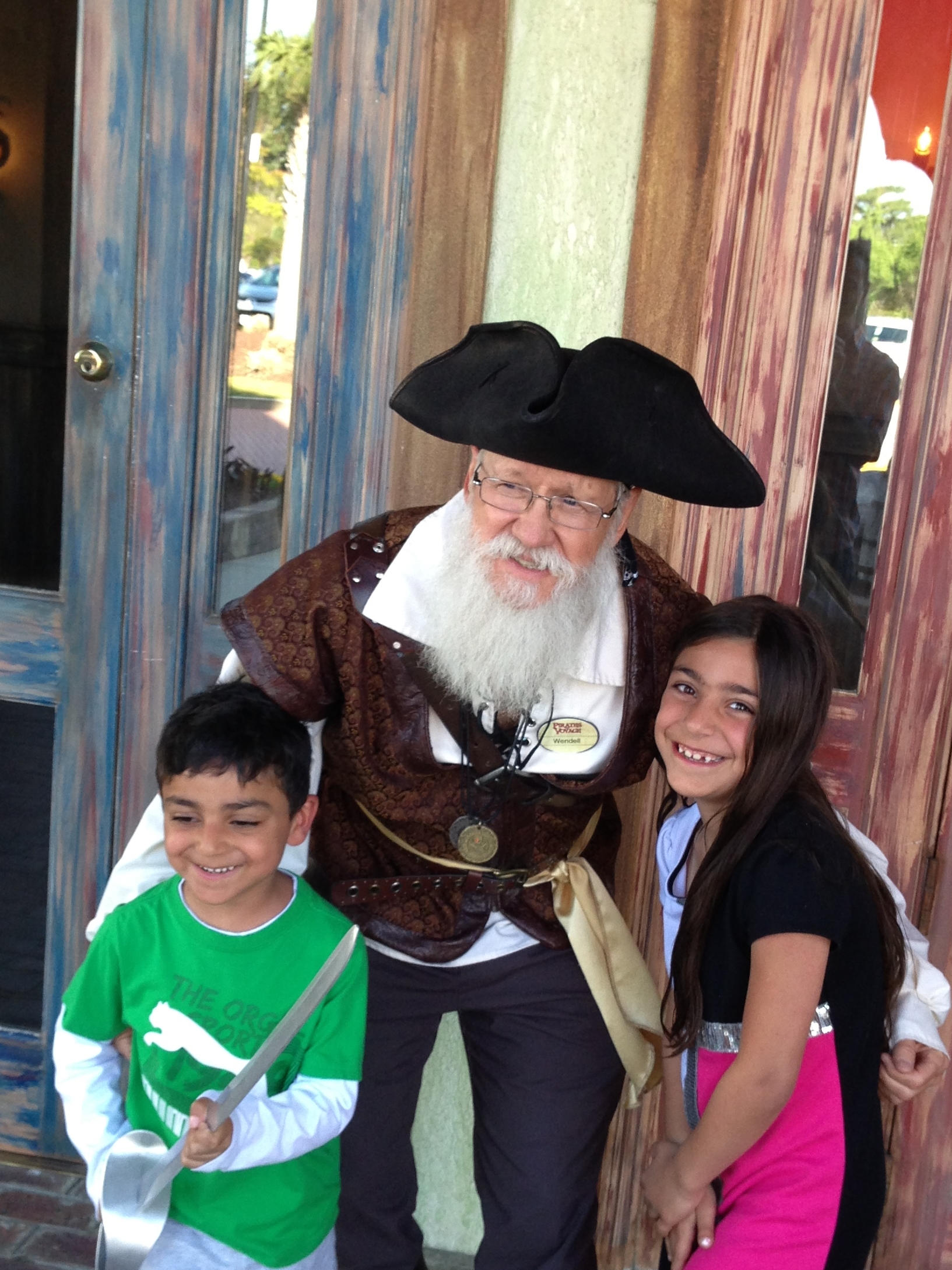
Wherever we went in Myrtle Beach, we saw signs for the dinner show “Pirates Voyage.” On our hotel’s “Do Not Disturb” door hanger, airplane advertising banners that flew over the ocean, on street billboards. If we asked a hotel employee to suggest a tour or show, the first words that came out of their mouth was “Pirates Voyage!” Adding that not only our children will love it, but so will we. And the food – “It’s amazing!” one man told us.

We placed it on our to-do-list, never expecting that the experience would mesmerize our children where we could eat our entire dinner, dessert included, without a single distraction. We watched a show prior to the show, where there was wonderful entertainment, particularly that of a sea lion. Then we were led into the dinner arena, which resembled a ship with seats all around and in the middle a smaller ship in water.

Within no time, a colorful splendid show appeared before our eyes. It consisted of pirates and mermaids and acrobats and sea lions and parrots! As we watched, we got to enjoy a delicious feast of creamy vegetable soup (served and eaten right out of a cup without a spoon), half roasted chicken, cob on the corn, “Pirate Shipwreck Taters” and “Apple O’Me Eye Pie.”

It seems that anything Dolly Parton puts her hands on is filled with tremendous love, high spirits, and great quality – from her singing to her movies to her shows and philanthropy. Her literacy program, “Dolly Parton’s Imagination Library,” mails one book per month to each enrolled child from the time of their birth until they enter kindergarten, across 36 U.S. states. In December 2007, it expanded to Europe. The program distributes more than 2.5 million free books to children annually. My children at one point had enjoyed these wonderful books!

Thank you, Dolly!

If it Had not Been for the Slaves….

Plantation Tour

“If it was not for the slaves, Georgetown would not have been developed,” said Captain Rod during our Low Country Plantation Tour.

With his southern humor, pointing out a bald eagle and its nest every now and then, a lighthouse, numerous plantations, a junkyard boat, etc., Captain Rod explained how the first English-speaking settlement in South Carolina was established on the coast in 1670. For the first thirty years the colonists had little success on this land, but by about 1700 they discovered that rice, imported from Asia, grew well in the inland valley swamps of the Low Country. Throughout the 1700s the economy of South Carolina was based significantly on the farming of rice. In 1700, 300 tons of American rice was shipped to England.

As rice grew more profitable, the towns of Charleston and Georgetown in South Carolina grew into wealthy ports that imported slaves from West Africa and exported rice to European countries that paid a premium for the “Carolina .” Between 1505 and 1888 around 12 million Africans were enslaved and brought to the New World.

“Did you know that they found rice in the pyramids?” asked Captain Rod.

It is debated how exactly rice was brought over to North America. Some say a damaged ship was forced to dock in the Carolinas. In return for repairs, the captain of the ship gave the colonizers a bag of rice. It is also believed that slaves from Africa rice from their land.

While the land has been reclaimed by wild grass and a few river alligators, there are still two plantations in Myrtle Beach that grow commercially distributed rice.

Slaves and their descendants have contributed a great deal to this country. We passed by the Friendfield Plantation where a child slave, Jim Robinson, lived. He one day fell off of a tree 25 feet tall and broke his arm. He was taken to the doctor who wrapped his arm and ordered that the bandage be changed to avoid an infection. Well, the bandages were not changed and the young boy’s arm had to be amputated. Feeling sorry for him, the doctor adopted Jim Robinson, who later became so successful his great great-grand daughter became First Lady of the United States. Her name is Michele .

And a research team from Ancestry.com, the world’s largest online family history resource, has also concluded that the nation’s 44th president, President Barack , is also the 11th great-grandson of John Punch, the first documented African legally enslaved for life in American history.


Visiting the Hobcaw Barony Mansion in South Carolina

Hobcaw Barony

Last night my family returned from South Carolina. Myrtle Beach was where my husband and I spent our honeymoon, and we loved it enough to return for our 9th year wedding anniversary – this time with two children.

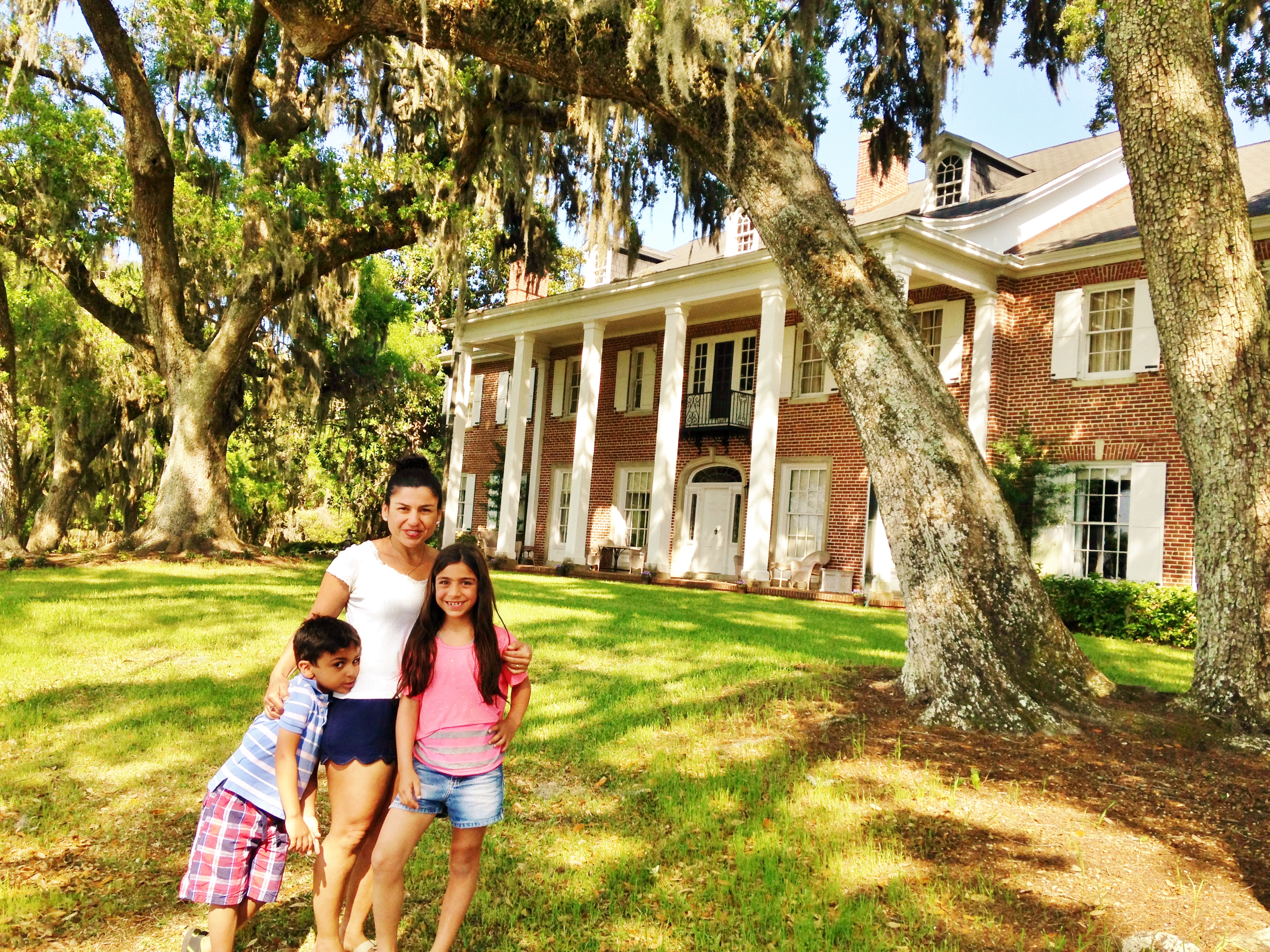
It was a lovely trip, with one of my favorite sites being the Hobcaw Barony – 16,000 acres of land which Native Americans called “hobcaw,” meaning between the waters.
The land was purchased by a Wall Street legend, presidential advisor and South Carolina native Bernard M. Baruch in 1905 for a winter hunting retreat. The Hobcaw Barony House is 13,000 square foot, with 12 ½ bathrooms and 16 bedrooms, nine of which are master bedrooms. In 1932, Winston Churchill was a guest in this house. We were shown his favorite sitting chair. In 1944, Franklin Roosevelt stayed for what was supposed to be two weeks but which was extended to four weeks. Other notable guests included Woodrow Wilson and Ralph Pulitzer.

The house was welcoming, with black and white family photos everywhere, the sun shining in through the windows, and in a number of cases, visitors being allowed to sit on the furniture. Taking care of the Hobcaw Barony was evidently no easy task, as at times the Baruch’s had as many as 150 servants!

Bernard Baruch’s eldest child, Belle W. Baruch, later began purchasing the property from her father beginning in 1936. Belle was an accomplished horsewoman, a sailor and she also had an airplane which she flew herself. By 1956, Belle owned Hobcaw Baron entirely. Upon her death in 1964, it was transferred to the Belle W. Baruch Foundation for a nature and research preserve. It consists of over 37 buildings that represent the 18th and 19th century rice cultivation and 20th century winter retreats.

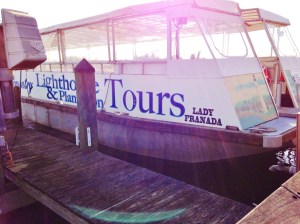
We arrived to this house by a ferry, which included a tour of the surrounding Georgetown plantations. Later I learned that a two-hour bus tour is available year round which for $20 not only takes you inside the Hobcaw Barony house, but also includes a drive by Bellefield Planation and stables, the home of Belle Belle Baruch, a drive through Friendfield Village, the last 19th century slave village on the Waccamaw Neck, and information on coastal ecosystems, native wildlife and endangered species.

The Hobcaw Barony definitely deserved at least a two-hour tour. Oh well, guess that gives me a good reason to return once again to Myrtle Beach.

For a tour of this beautiful and inspiring land, visit:
http://www.hobcawbarony.org/tours.htm or call 843-546-4623

Banned in Egypt for being too Sexy!

HaifaWehbe

The Egyptian-made movie, “Beauty of the Soul” was just banned in Egypt for scenes deemed sexually provocative. The film, starring a famous Lebanese singer Haifa Wehbe, was said to have been inspired by Monica Bellucci’s 2000 hit “Malena.”

In an interview yesterday, the director of the film asked those who helped in the decision to ban the film if they had ever seen it. Their response was “No, but we saw the ad.”

“If you are going to ban a movie, couldn’t you have at least watched it first?” he asked in frustration.

“Do I have to smoke a cigarette in order to know whether or not it’s bad for you?” answered one of the officials.

As I watched the debate, a movie called Wrong Turn came to mind. One day I was flipping the channels when I came across four gruesome men killing and slicing people in ways too disgusting to comprehend. Using hammers and lawnmowers and butcher knives and axes, they pierced peoples’ ears, slit their mouths, jabbed their eyes, cut off their heads and held it up like a trophy.

None of the gory scenes in Wrong Turn were edited – oh, except the nipples of a dead woman. As her corpse hung naked upside down while one of the killers butchered her neck like one would a lamb, so he could detach her head, her nipples were hazed.

Ironically, breasts are a natural thing that almost everyone sees in real life every day. God made them for a great purpose. They feed and nourish babies. Violence and killing are the exact opposite of what breasts represent, yet breasts are seen as the “enemy” to society’s eyes and violence as the “norm”?

Conrad Hilton was right. In his biography, he talked about how he had tried to ban or lesson violence from TV shows but realized he was not going to see it happen in his lifetime. Well, evidently, not in any lifetimes anytime soon, since horror and violent films keep escalating. Wrong Turn, for instance, is releasing its 6th sequel this year and for the Arabic news channels’ coverage gets bloodier and bloodier.

Lisa Nichols – I know, like I know, like I know, like I know

lisanichols

A few months ago I received an email invitation from Mindvalley Academy for a live creative visualization session with Lisa Nichols. Lisa was described as “The Secret’s” amazing star. I signed up for the session, not expecting to get what I got.

For many years, I have read books on the power of the subconscious mind, creative visualizations, looking within and manifesting your dreams. As a result, I have been able to live the life that I want. But of course, no matter where one is, there’s always that passion and desire for growth and mystery. The day of the live session, Lisa took me deeper than I had gone in a long time. Her voice pierced through my heart like sunshine and lightening, making my vision resonate the words that she’s famous for saying – “I know like I know like I know like I know.”

Then in April, she offered a “Power Week” free teleseminar where every morning, she set a powerful intention for the day, did an inspirational interview with one of her friends, wrapped up with a power action for people to do that day, and sometimes she sent out a homework assignment.

What I liked most about Lisa is that she’s not all about the money. She talks about her son quite a bit, about the value of healthy relationships, and during part of the “Power Week” she was talking to us from the hospital where her father was going to have surgery. She said she’d turned her car and the hospital waiting room into her office. I loved that! It reminded me how for a month now, I’ve been going back and forth to the hospital where my mom is, lugging around a computer and a heavy bag of notebooks.

“How many of you have an amazing life but you get distracted by the BUT?” she once asked.

Lisa is about motivating the masses (www.visitingthemasses.com), and she’s worth listening to, or at least reading her books, like “No Matter What!”

Starting Point: Find Your Place in the Story

Jesus2

When I signed up for “Starting Point”, a ten week bible study class, I was not sure why I signed up. All I knew was that the past sixteen months of going to Freedom Christian had taught me quite a bit about the religion I was born into, the religion of my ancestors, and I wanted to honor this religion by learning more.

Each week, people in the group talked about their story of faith, and then through a book, CD, and conversations with the pastor and his wife we explored many subject matters, particularly the role God has played in our story up until now. Thought-provoking questions were raised and ways of becoming more intimate with God were discussed. Everyone’s courage in sharing their stories, in proclaiming how their faith changed their lives, touched and inspired me.

Through the process, I began to see my place in the story, remembering my grandparents who lived in the then Christian village of Telkaif in northern Iraq. My maternal grandfather Tobia went to church every morning at 5:30am, before he had breakfast and began working on his farm. He went to church a second time in the evening, before dinner. I remembered my people, the Chaldeans, who were one of the first in the Middle East to embrace Christianity and I reflected on the persecution they have had to endure for hundreds of years, especially in the last ten years. I looked at my relationship with Jesus, and saw how his energy lived on from one generation to the next – in our case, for two thousand years. He was in our blood.

“I know the story Jesus has had in my life throughout the years,” I said when I shared my story with the class. “Now, through the Bible, I want to read about his story.”

So while the class ended today, my story in this journey is just beginning.