Cultural Glimpse

Enjoying diversity

Category: History

Conversation Between Saddam and Glaspie about US Media

Media

APRIL GLASPIE: I have a direct instruction from the President to seek better relations with Iraq.

HUSSEIN: But how? We too have this desire. But matters are running contrary to this desire.

GLASPIE: This is less likely to happen the more we talk. For example, you mentioned the issue of the article published by the American Information Agency and that was sad. And a formal apology was presented.

HUSSEIN: Your stance is generous. We are Arabs. It is enough for us that someone says, “I am sorry. I made a mistake.” Then we carry on. But the media campaign continued. And it is full of stories. If the stories were true, no one would get upset. But we understand from its continuation that there is a determination.

GLASPIE: I saw the Diane Sawyer program on ABC. And what happened in that program was cheap and unjust. And this is a real picture of what happens in the American media — even to American politicians themselves. These are the methods the Western media employs. I am pleased that you add your voice to the diplomats who stand up to the media. Because your appearance in the media, even for five minutes, would help us to make the American people understand Iraq. This would increase mutual understanding. If the American President had control of the media, his job would be much easier.

International Coffee Hour

Coffee Hour

My husband normally drops off the kids at school in the morning. Once they’re out of the house, I usually start the day with writing, cleaning the house, cooking, and then it’s 3pm and I have to pick up the kids. Yesterday morning was different. I volunteered to drop off the kids because I wanted to join a new coffee hour event at 8:30am.

Over coffee and donuts, I sat with the principal of the school, Mr. Slancik, and the community’s favorite priest, Father Matthew, along with several teachers and parents. We discussed politics, religion, and community news. I noticed for the first time the flags that hung on the walls of the cafeteria. I counted forty-one flags, each from a different country around the world.

I asked the principal what these flags represent. The principal said that according to what he was told, since Schcuchard Elementary was built, students from that many nationalities had at one point or another attended this school. I was happy to know the school had such rich diversity. The more diverse a place is, the more opportunity to meet people from different backgrounds and learn new things. This is precisely what I loved about traveling overseas. I always attained a new perspective and returned home with greater and deeper knowledge and appreciation of the world, as well as my home.

I carefully observed the flags, each distinct in its symbolism. One in particular caught my attention and I asked, “Does anyone know what country that red flag belongs to?”

The English teacher beside me said, “That’s an Albanian flag. It’s from my birth country. The symbol is a double-headed eagle.”

The eagle was used for heraldic purposes in the late middle ages by a number of noble families in Albania. The Kastrioti’s coat of arms, depicting a black double-headed eagle on a red field, became famous when he led a revolt against the Ottoman Empire that resulted with the independence of Albania from 1443 to 1479. This was the flag of the League of Lezhe, which was the first unified Albanian state in the middle ages.

I did not know that like Iraq, Albania was once occupied by the Ottoman Empire. People are always focusing on our differences, allowing our similarities to go by the wayside. More coffee hours would help cure that.

Tea5

How to Advertise War

How to Advertise War

From The Magic of Believing by Claude Bristol (published 1948), pages 51-52

For forty-four years, ever since the Russ-Japanese war, the Japs immortalized Naval Warrant Officer Magoschichi Sugino, fabled as one of Japan’s early suicide fighters and greatest heroes. Thousands of statues were erected to his memory and in repeated song and story young Nipponese were taught to believe that by following his example, they could die in no more heroic manner than as a suicide fighter. Millions of them believed it and during the war thousands of them did die as suicide fighters… This terrible and persistent deeply founded belief, though based entirely on a fable, caused thousands of Japanese to throw away their lives during the war.

We, too, as Americans, were subjected to the power of suggestion long before and during World War I; we got it again in a big way under the direction of General Hugh Johnson with his N.R.A. plan, and in World War II it inspired us to increase our effort, to buy bonds, and so forth. We were constantly told that Germany and Japan had to be defeated unconditionally. Under the constant repetition of the same thought all individual thinking was paralyzed and the mass mind became grooved to a certain pattern – win the war unconditionally. As one writer said: “In war the voice of dissension becomes the voice of treason.” So again we see the terrific force of thought repetition – it is our master and we do as we are told.

This subtle force of the repeated suggestion overcomes our reason, acting directly on our emotions and our feelings, and finally penetrating to the very depths of our subconscious minds. It is the basic principle of all successful advertising – the continued and repeated suggestion that first makes you believe after which you are eager to buy.

The Tradition of New Year Resolutions

Goose

Ancient Babylonians started the tradition of making New Year Resolutions some 4,000 years ago. They made promises to their gods at the start of each year that they would return borrowed objects and pay their debts. For the Babylonians, the first new moon following the vernal equinox—the day in late March with an equal amount of sunlight and darkness—heralded the start of a new year. They marked the occasion with a massive religious festival called Akitu (derived from the Sumerian word for barley, which was cut in the spring) that involved a different ritual on each of its 11 days.

According to www.adoptionworld.com, late March is actually a logical choice for the beginning of a new year. It is the time of year that spring begins and new crops are planted. January 1st, on the other hand, has no astronomical nor agricultural significance. It is purely arbitrary. The Romans continued to observe the new year on March 25, but their calendar was continually tampered with by various emperors so that the calendar soon became out of synchronization with the sun.

The celebration of the new year is the oldest of all holidays. If there’s one thing to learn from it is that we should stop tampering with nature and ancient wisdom. Perhaps then more people than the current 8 percent will achieve their New Year’s Resolutions.

If it Had not Been for the Slaves….

Plantation Tour

“If it was not for the slaves, Georgetown would not have been developed,” said Captain Rod during our Low Country Plantation Tour.

With his southern humor, pointing out a bald eagle and its nest every now and then, a lighthouse, numerous plantations, a junkyard boat, etc., Captain Rod explained how the first English-speaking settlement in South Carolina was established on the coast in 1670. For the first thirty years the colonists had little success on this land, but by about 1700 they discovered that rice, imported from Asia, grew well in the inland valley swamps of the Low Country. Throughout the 1700s the economy of South Carolina was based significantly on the farming of rice. In 1700, 300 tons of American rice was shipped to England.

As rice grew more profitable, the towns of Charleston and Georgetown in South Carolina grew into wealthy ports that imported slaves from West Africa and exported rice to European countries that paid a premium for the “Carolina .” Between 1505 and 1888 around 12 million Africans were enslaved and brought to the New World.

“Did you know that they found rice in the pyramids?” asked Captain Rod.

It is debated how exactly rice was brought over to North America. Some say a damaged ship was forced to dock in the Carolinas. In return for repairs, the captain of the ship gave the colonizers a bag of rice. It is also believed that slaves from Africa rice from their land.

While the land has been reclaimed by wild grass and a few river alligators, there are still two plantations in Myrtle Beach that grow commercially distributed rice.

Slaves and their descendants have contributed a great deal to this country. We passed by the Friendfield Plantation where a child slave, Jim Robinson, lived. He one day fell off of a tree 25 feet tall and broke his arm. He was taken to the doctor who wrapped his arm and ordered that the bandage be changed to avoid an infection. Well, the bandages were not changed and the young boy’s arm had to be amputated. Feeling sorry for him, the doctor adopted Jim Robinson, who later became so successful his great great-grand daughter became First Lady of the United States. Her name is Michele .

And a research team from Ancestry.com, the world’s largest online family history resource, has also concluded that the nation’s 44th president, President Barack , is also the 11th great-grandson of John Punch, the first documented African legally enslaved for life in American history.

Visiting the Hobcaw Barony Mansion in South Carolina

Hobcaw Barony

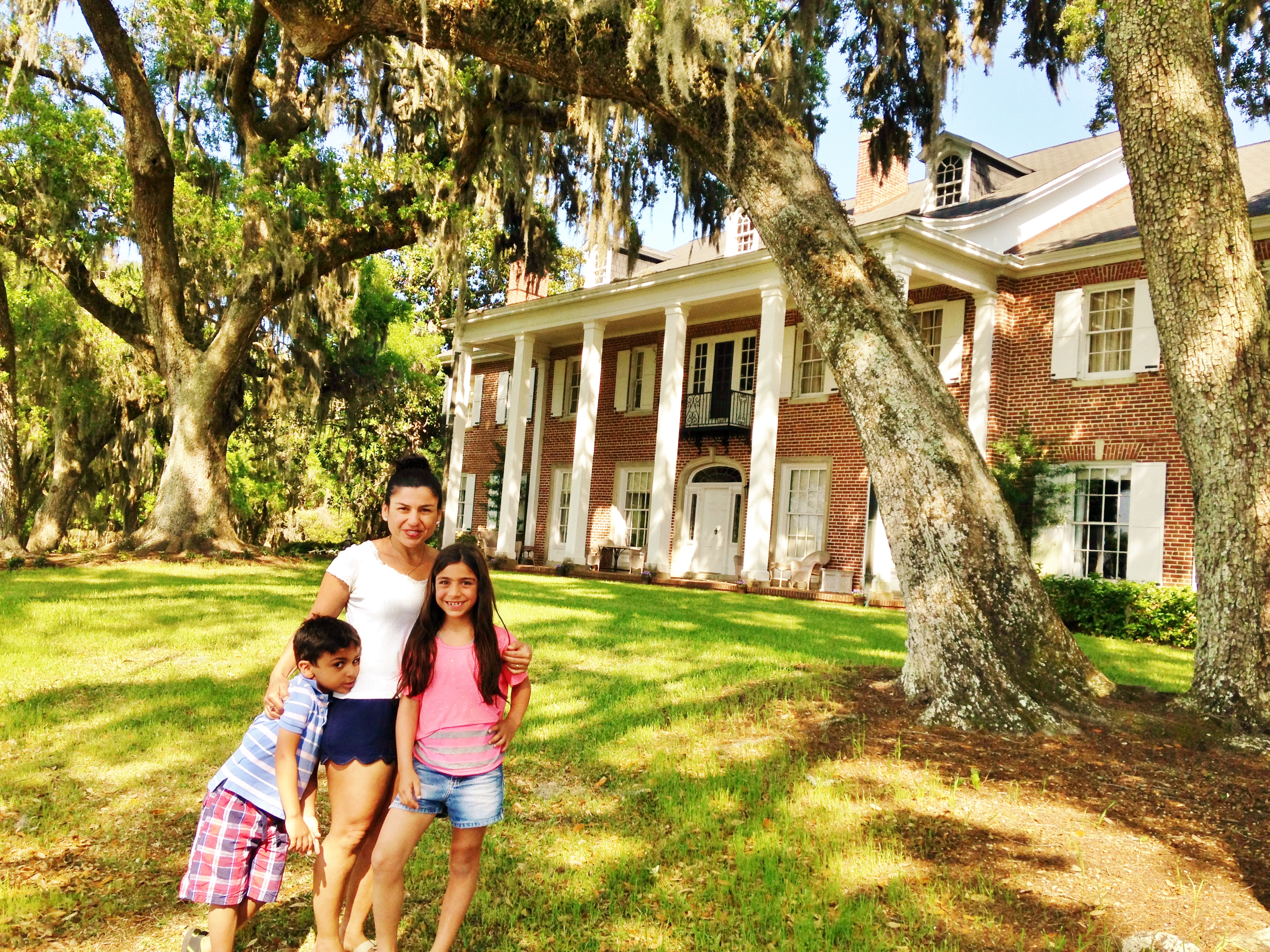
Last night my family returned from South Carolina. Myrtle Beach was where my husband and I spent our honeymoon, and we loved it enough to return for our 9th year wedding anniversary – this time with two children.

It was a lovely trip, with one of my favorite sites being the Hobcaw Barony – 16,000 acres of land which Native Americans called “hobcaw,” meaning between the waters.
The land was purchased by a Wall Street legend, presidential advisor and South Carolina native Bernard M. Baruch in 1905 for a winter hunting retreat. The Hobcaw Barony House is 13,000 square foot, with 12 ½ bathrooms and 16 bedrooms, nine of which are master bedrooms. In 1932, Winston Churchill was a guest in this house. We were shown his favorite sitting chair. In 1944, Franklin Roosevelt stayed for what was supposed to be two weeks but which was extended to four weeks. Other notable guests included Woodrow Wilson and Ralph Pulitzer.

The house was welcoming, with black and white family photos everywhere, the sun shining in through the windows, and in a number of cases, visitors being allowed to sit on the furniture. Taking care of the Hobcaw Barony was evidently no easy task, as at times the Baruch’s had as many as 150 servants!

Bernard Baruch’s eldest child, Belle W. Baruch, later began purchasing the property from her father beginning in 1936. Belle was an accomplished horsewoman, a sailor and she also had an airplane which she flew herself. By 1956, Belle owned Hobcaw Baron entirely. Upon her death in 1964, it was transferred to the Belle W. Baruch Foundation for a nature and research preserve. It consists of over 37 buildings that represent the 18th and 19th century rice cultivation and 20th century winter retreats.

We arrived to this house by a ferry, which included a tour of the surrounding Georgetown plantations. Later I learned that a two-hour bus tour is available year round which for $20 not only takes you inside the Hobcaw Barony house, but also includes a drive by Bellefield Planation and stables, the home of Belle Belle Baruch, a drive through Friendfield Village, the last 19th century slave village on the Waccamaw Neck, and information on coastal ecosystems, native wildlife and endangered species.

The Hobcaw Barony definitely deserved at least a two-hour tour. Oh well, guess that gives me a good reason to return once again to Myrtle Beach.

For a tour of this beautiful and inspiring land, visit:
http://www.hobcawbarony.org/tours.htm or call 843-546-4623

AKITU, Chaldean Babylonian New Year Festival

Akitu

Akitu/Chaldean Babylonian New Year Festival is a festival that marks the renewal of life, the beginning of spring in ancient Mesopotamia. It is also referred to as Resh Shatti(m), which literary means the beginning of the year.

In Babylonian religion, whether during the first recorded unification of ancient Mesopotamia under the legendary king of Kish Meshalim (2550 BC) or during the Babylonian dynasties, it came to be dedicated to Marduk’s victory over Goddess Tiamat, the bloated female dragon that personifies the saltwater ocean; in short, the victory of civilization and order on Chaos.

It has been proposed that Thanksgiving may trace its earliest recorded origins to this ancient Mesopotamian harvest festival.

In honor of this occasion, the Chaldean Educational Center of American and UR Multimedia held its yearly AKITU festival event at St. Joseph Chaldean Catholic Church on Sunday, April 6th. The festival included Chaldean music, a book fair and photography exhibit, a show, and of course, food and drink.

My children’s favorite part of the event was eating the delicious kabob sandwiches! I loved seeing the women dressed in the traditional clothes my grandmothers and great-grandmothers once wore. My most favorite part was the information that artist, historian and author Amer Hanna Fatuhi shared about this festival.

“One of the roots of this festival is the sacred matrimony Hashadu, which represents the union of the male (sky) and the female (earth),” he said. “By mixing the sky and earth together, life grows, and you get the sacred matrimony, a renewal of life. This marriage was practiced by the king and the highest priestess.”

More information can be learned about this festival by reading Mr. Fatuhi’s book, The Untold Story of Native Iraqis.

Website: http://amerfatuhiart.com/Amer-native/
Facebook: The Untold Story of Native Iraqis

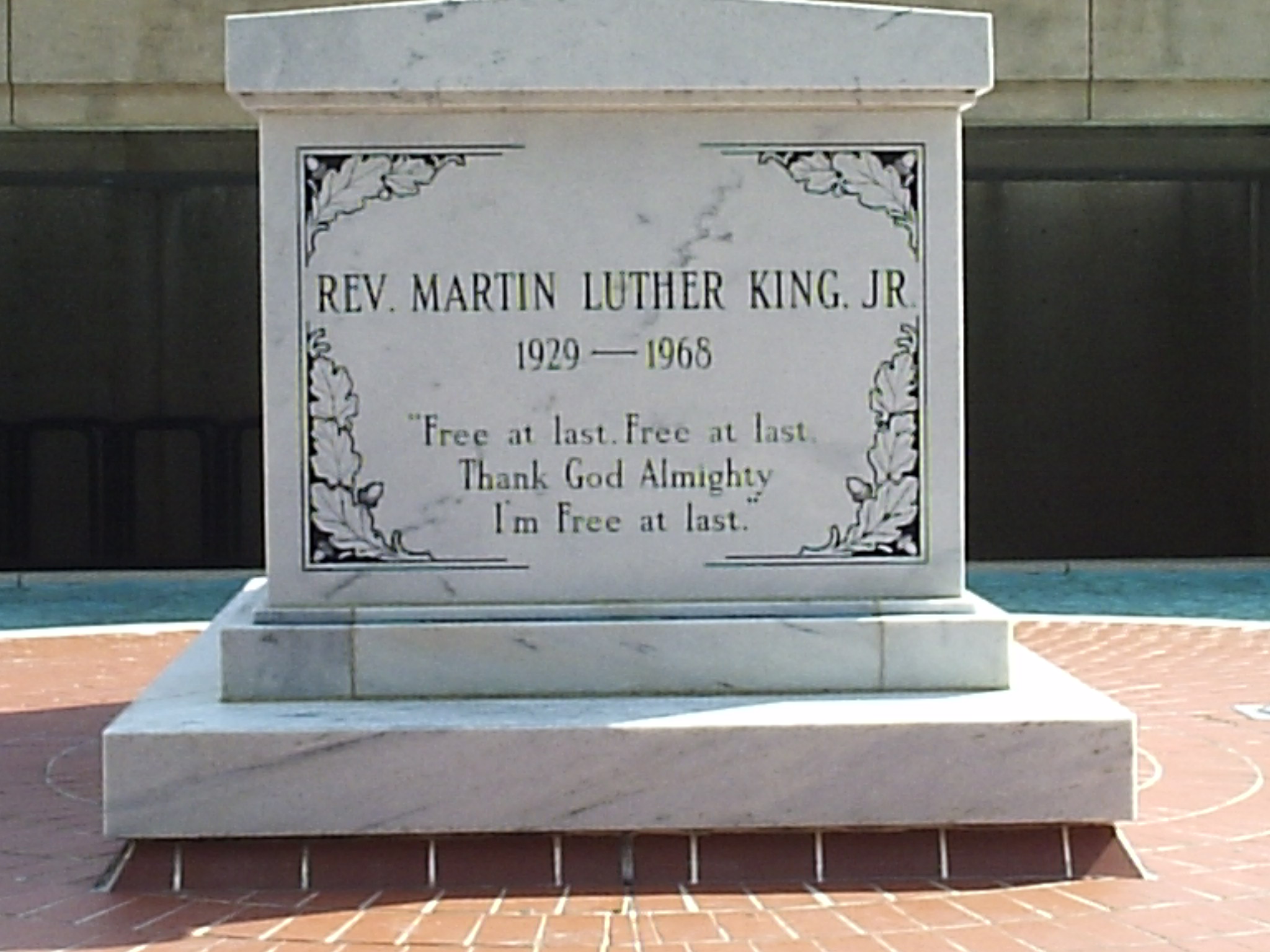
A Kid’s Take on Martin Luther King

OLYMPUS DIGITAL CAMERA

I was watching my five-year-old nephew when he soon whimpered, “I want to call my dad!” I avoided his request because the reason his dad dropped him off at my house to begin with was to get time alone.

My nephew insisted. “My teacher said that it’s Martin Luther King Day and we have to be nice to people.”

“Meaning?” I said.

“You should be nice to me,” he said, smiling.

He suckered me in. The name Martin Luther King brings the softest side in you. Most people are moved by Dr. King’s “I have a dream speech” but he had many many inspirational values that if we applied to our daily life, we would live in peace.

Later my nephew said, “I want Martin Luther King to come back to life, so he can tell us about his dream.”

His words really touched my heart. Unfortunately, we can’t bring Martin Luther King back to life, but we can keep his dream alive by living it.

Nineveh is Like Any Major City in the U.S.

Nineveh

“Nineveh is like any major city in the U.S.,” said Pastor Aaron at today’s sermon.

Nineveh was an ancient Assyrian city on the eastern bank of the Tigris River. It is one of the oldest and greatest cities in antiquity. The area was settled as early as 6000 BC and by 3000 BC had become an important religious center for worship of the Assyrian goddess Ishtar.

“Nineveh, the capital of Assyria, was the superpower of her day,” said the Pastor. “It required three days to circle metropolitan Nineveh. And the Ninevites lived large. They enjoyed the best chariots, the finest food, and the most exotic entertainment. It had an extensive business and commercial system like none in the world. In addition, Assyria had ruled the world for 200 years and was the strongest military power. Sounds familiar?”

He added that Nineveh’s wickedness was great, and unbeknownst to them, their days were numbered. It would not be long before Babylon would overtake Nineveh. God gave them one last chance to repent, however, by sending Jonah. After Jonah’s sermon to them, the entire city turned from their sin of violence, which they were known for, and turned to God. (Jonah 4:4 NLT)

“Shouldn’t we be concerned with Sterling Heights, with that great city and its surrounding cities?” asked the Pastor.

The message is clear, and it resembles the heart of Cultural Glimpse. Wherever we are we are on holy ground. It is wonderful to recognize, honor and serve the sacredness of our homes and communities.

The Women of Telkaif

IMG_0927

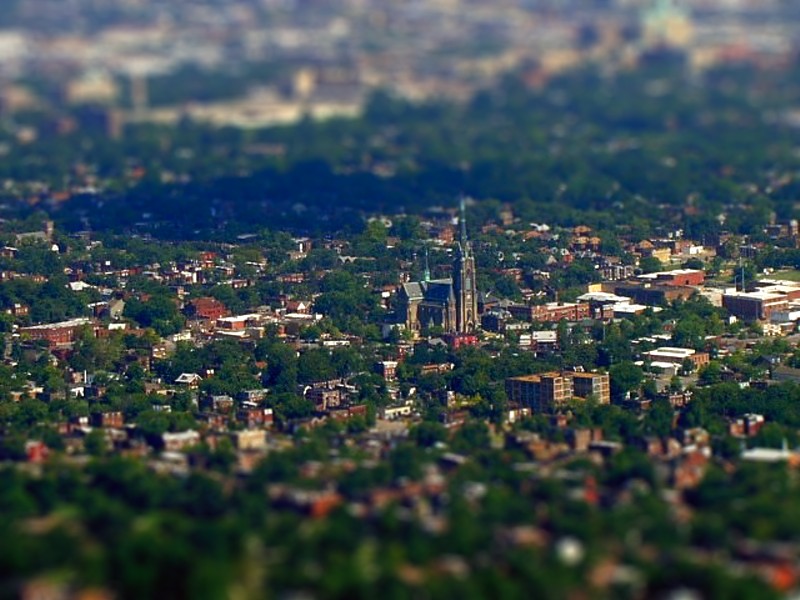
Telkaif like most of the villages in the north is in the city of Mosul, Iraq. Mosul is where Agatha Christie once lived with her husband, an archaeologist who was involved in the excavation in Nimrud in the north of Iraq and he explored the ancient city of Ur in the south.

“I fell in love with Ur,” Agatha Christie wrote in her autobiography.

I fell in love with Telkaif, where my parents and their parents and their grandparents are from.
Yesterday I invited over some cousins who I stayed with in Telkaif in 2000. Telkaif is in the province of Mosul, and there, I got to visit the various churches and monasteries that date back to the early Christians in the place, from the 6th Century. I got to sleep on the rooftop and watch the stars shine brightly over the maze of streets and exquisite 19th century houses. I got to observe the fresh meat and dairy market when around six o’clock in the morning, my cousin and I walked to a place where cattle was slaughtered and where countrywomen sat beside a curb, selling homemade dairy products like yogurt and clotted cream. For a dollar, I also bought an abaya, a type of veil, from Mosul’s market.

Things are no longer the same in the northern part of Iraq. According to the Bishop of Mosul, of a 32,000 plus population of Christians, there are now less than 2,500. So I may soon have no relatives left in Iraq to visit.