
When Women Owned Bathing Suits in Baghdad
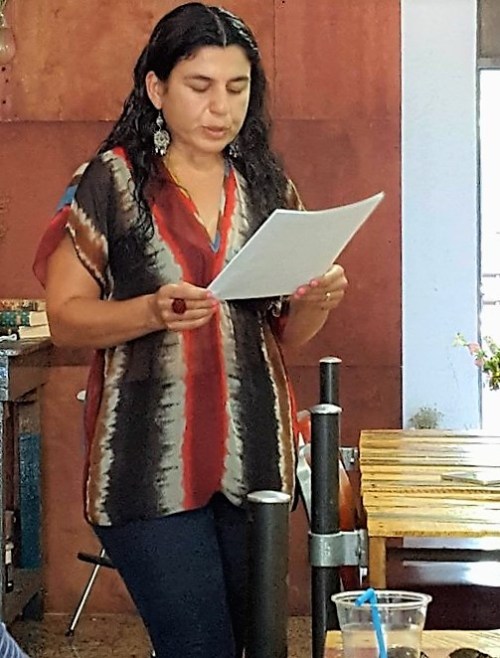
Six Detroit area-writers gathered Sunday to share their work (memoir, fiction, poetry) during the monthly reading series organized by Detroit Working Writers. The theme for July was water and I shared two passages from my new book, Healing Wisdom for a Wounded: My Life-Changing Journey Through a Shamanic School (Book 2).
The first passage was from Chapter 7, where I recount a story that took place in the 1970s. In our neighborhood in Baghdad, almost every home had some sort of bathing attire because the families had a membership to Al Zawraa Swim Club which had two pools outside, one for children and one for adults. This made it useful when an out-of-towner who did not possess a bathing suit was invited for a swim, as so happened with one of my cousins. My cousin spent the night over our house and the next day my siblings wanted to take her swimming. Because she did not have a bathing suit, they ended up borrowing one from a neighbor who was somewhat my cousin’s size.
As many know by now, Iraqi women who grew up in the 1950s, 60s, and 70s had much more liberty than the women who grew up during the 80s and the 90s. They enjoyed higher education, independence, and positions in the public work force. Many even dressed in miniskirts and bikinis. Men imitated the Western style of a shaggy moptop hairstyle, and dressed in bellbottoms and disco shirts. Women dressed miniskirts, cropped pants, and had fancy updos.
When Khairallah Talfah, Saddam’s paternal uncle and his father-in-law and the brother-in-law of then President Al-Bark, became the Mayor of Baghdad in the early 1970s, he ordered the security service and police force to spray paint the legs of any woman wearing short skirts and to tear the bellbottom trousers worn by any male or female. These actions against any westernized contemporary trends only lasted a few weeks and were terminated abruptly, when Vice President Saddam Hussein intervened. These trendy fashions subsequently spread all over the country and ironically had been worn even by Tulfa’s own sons and daughters.
 “The school helps you to be heard not just by others listening to you, but by you listening to yourself,” said Lynn Andrews during the second year of her four-year shamanic school. “You have to do that in order to create a mirror for yourself, for your act of power. We’re peeling away the clouds of ignorance that cloud your vision. Then you begin to see that you really do have something important and wonderful to say, and more and more you’re appreciating yourself. Patience and diligence are important in this.”
 The world news was infused with negative stories and my kitchen had dust galore as men tore down one of its walls. I could not be happier to leave this chaos and the news behind and transport myself to the Detroit Working Writers Boot Camp which was hosted at the home of author, gardener, educator, and my great mentor Iris Underwood. Her home being in an organic lavender farm, I knew I was in for a treat.
 Cultural Glimpse